

Veo's Santa Monica Resident Pass: What Westside Merchants Should Know
Santa Monica-based Veo launched a 29-cent-a-minute resident pass and is piloting tap-to-park scooter corrals. What Westside merchants and founders can learn.
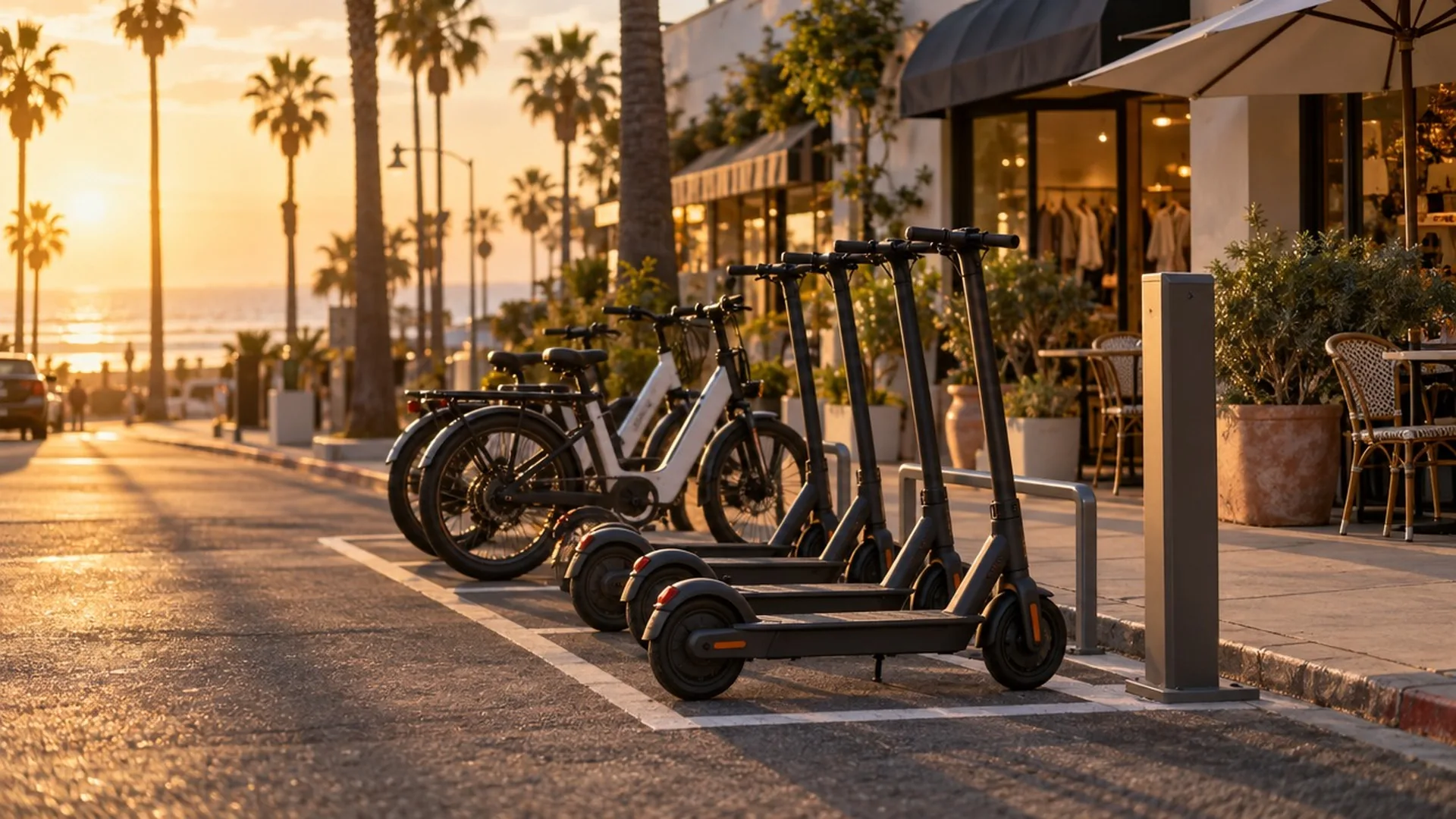
Santa Monica has been a test bed for shared scooters since they first showed up on its sidewalks, and one of the operators still running there is using its fifth anniversary to try two new ideas. Both matter for Westside merchants and for L.A. founders building mobility or curb-tech businesses.
Veo, the shared scooter and e-bike company that has had its headquarters in Santa Monica since 2022, has launched a Santa Monica Resident Pass that gives city residents rides at 29 cents per minute, Santa Monica Next reported on Nov. 20. The company is also preparing to test parking corrals with tap-to-end kiosks at select downtown Santa Monica events this month.
What Veo announced
According to the Santa Monica Next report, the resident pass is open to everyone who lives in the city. It sits alongside Veo Access, the company's existing income-based discount program, whose members Veo says have taken more than 20,000 rides in Santa Monica.
Veo says its vehicles have logged more than 2.3 million rides by more than 500,000 riders since it launched locally in 2021. Its Santa Monica fleet includes standing scooters, seated e-bikes and a newer two-person electric bike it calls the Apollo Duo.
The company also shared results from an October 2026 survey of 200 local riders. By Veo's count, 45% said they had used the service to connect to transit in the previous week, and 45% said they visit local businesses more often because of it. Seventy-nine percent said they drive less, and 37% said they do not own or have access to a car. Those are company-run survey figures from a small sample, so treat them as a signal rather than proof. Still, they point to a customer base that business owners near busy corridors should not ignore.
The parking problem, solved with a phone tap
The second piece is the more interesting one for operators. In the November pilot, riders will end trips inside designated corrals by tapping their phones against kiosks that use near-field communication, the same technology behind contactless payments. That confirms where a scooter was parked more precisely than GPS alone.
Veo has been building toward this for a while. In July, Cities Today reported that the system debuted in Queens, New York, with installations planned for Santa Monica and Denver. Alex Keating, Veo's vice president of policy and partnerships, told the outlet the corrals deliver "99 percent of the benefits of a dock-based system" with more flexibility on installation. The same report cited Veo's 2025 rider survey, in which 57% of respondents said they at least sometimes had trouble finding a suitable place to park.
Corrals use lightweight racks inside a marked area rather than one dock per vehicle. Veo has pitched cities on placing them in former curbside parking spaces, including near intersections where car parking has been removed for visibility. This follows a 2024 tool the company calls a Virtual Parking Coach, which reviews end-of-ride photos and gives riders feedback on bad parking.
What Westside merchants should take from it
Your customers may arrive on two wheels. If a discounted resident pass makes short trips cheaper, more neighbors may make quick runs to a café, salon or shop instead of driving. Businesses near downtown Santa Monica, Main Street and Montana Avenue can make that easy by keeping entrances clear and mentioning nearby parking corrals in their directions and Google listings.
Watch where corrals go. Corrals placed in former curb parking spaces change what the curb in front of a business does. If you rely on curbside pickups, deliveries or ADA access, follow the city's shared mobility updates and speak up early when locations are proposed.
Events are the test case. The pilot starts with downtown events, where crowds and scooter clutter peak. Event producers and vendors should ask organizers where riders will be directed to park so arrival and departure points don't block booths or load-in zones.
Lessons for L.A. mobility and curb-tech founders
Local pricing can be a policy tool. A resident-only rate builds goodwill with the people who vote on permits, not just with visitors. Founders who need city approval should think about what a "local's deal" could look like in their own business.
Data you publish shapes the debate. Veo leads with survey numbers on transit links, car trips and local shopping, which are the arguments city officials weigh. Collect that kind of data early, be clear about the sample, and share it.
Fix the complaint, not just the product. Sidewalk clutter has been the top complaint about shared scooters for years. Veo's answer is low-cost hardware plus a habit riders already know: tapping a phone. Startups facing a nuisance problem should look for a fix that is cheap to install and easy for users to adopt.
The bigger picture is that micromobility in Santa Monica has moved from novelty to infrastructure question. Whether the tap-to-park pilot spreads beyond events will depend on how riders, merchants and city staff judge it in the coming months. Business owners on the Westside have a stake in that answer and a chance to weigh in.
Sources: Santa Monica Next, Nov. 20, 2026; Cities Today, July 23, 2026.