

Sweetgreen Adds ChatGPT and Claude Ordering: Lessons for LA Restaurants
L.A.-based Sweetgreen now lets diners build orders in ChatGPT and Claude using a machine-readable menu. What L.A. restaurant owners can do to be AI-ready.
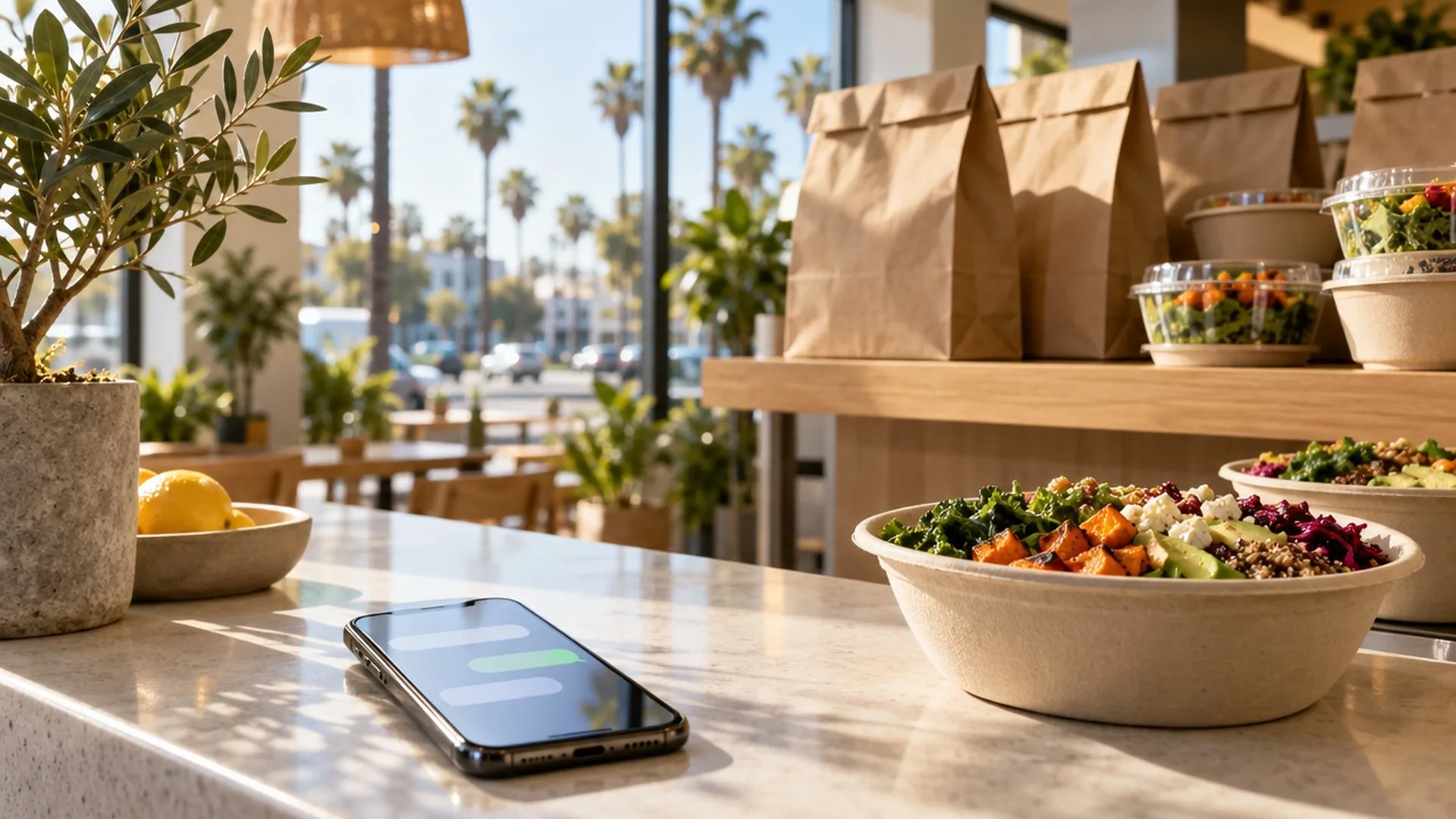
For years, getting found online meant ranking in search results and keeping a delivery-app listing up to date. Sweetgreen, the Los Angeles-based salad chain, is betting that the next way diners find a meal is by asking an AI assistant. On Nov. 18 the company launched what it calls agentic ordering inside ChatGPT and Claude. Customers can ask either assistant for a meal that fits a goal, build an order in the chat and then finish paying in Sweetgreen's own app or website.
Most L.A. restaurants will not build an AI connector anytime soon. Still, the launch is a useful look at what AI assistants need from a business before they can recommend it, and what owners can start doing now.
How Sweetgreen's version works
According to the company's announcement, as reported by QSR and Fast Casual, a customer turns on the Sweetgreen connector in Claude or ChatGPT on desktop or mobile. They can then ask for options that fit a nutrition goal, a dietary restriction or a taste. After confirming their local restaurant, they see a visual menu in the conversation with prices, calories and allergens, and they add items to a bag with a tap. Checkout happens in Sweetgreen's app or on its website, where saved payment methods, credits and rewards already live. It works for pickup and first-party delivery at all Sweetgreen locations, which Fast Casual puts at 289.
The groundwork was the menu itself. Sweetgreen says it made its menu machine-readable, with ingredients, nutrition, allergens, pricing and real-time availability accurate for each restaurant. "That only works if the agent has ingredient information it can trust," chief technology officer Wouleta Ayele said in the company's release, as quoted by Nation's Restaurant News.
Why a salad chain is doing this now
Sweetgreen is looking for growth. Hoodline, citing the company's third-quarter results, reported that revenue rose 2.1% to $176.0 million, while same-store sales fell 6.4%, and digital orders made up 66.1% of revenue, up from 61.8% a year earlier. A new digital front door is a way to win more orders without opening more stores.
Diners say they are open to it. The National Restaurant Association has found that roughly six in 10 millennial and Gen Z adults say they would place an order with an AI-generated bot, a figure several trade outlets cited alongside the launch. The same group's research, as summarized by Hoodline, found that only a small share of operators use AI for customer ordering so far.
Sweetgreen is not the only company working on this. Nation's Restaurant News noted that Google Maps announced a partnership with Square, Toast and Uber earlier this year to help people find restaurants through its Gemini AI, and that Gett Technologies recently launched a network meant to route AI-driven orders to restaurants' own ordering sites.
What L.A. restaurant owners can do now
These are our own suggestions for independent restaurants, cafes and small chains. None of them needs a custom AI integration.
Clean up your menu data. AI assistants can only recommend what they can read. Make sure your menu is posted as real text on your website, not just a photo or PDF, and that prices, hours and items match what is on Google, Yelp and your ordering platforms. When an assistant pulls conflicting prices from three places, it may skip you or get the order wrong.
List allergens and dietary details. Sweetgreen's launch is built around requests like "dairy-free" or "high-protein." If your menu clearly marks vegan, gluten-free, nut-free or spice levels, you give both people and software a reason to choose you. Keep it accurate: a wrong allergen label is a guest-safety risk.
Protect your first-party channel. Sweetgreen sends every AI order back to its own checkout so it keeps the customer relationship, payment data and loyalty points. For smaller restaurants, that is a reminder to keep a direct online ordering link, through your point-of-sale provider or your own site, alongside third-party delivery apps.
Ask your POS and ordering vendors about AI. Many L.A. restaurants already run on systems like Square or Toast. Ask your provider whether your menu feeds into AI and map tools, and what you need to update so it stays current.
Test it yourself. Ask ChatGPT, Claude or Gemini what to eat near your location, or for a dish you serve. If your restaurant does not come up, or the details are wrong, start with your website and listings.
The bigger picture
AI ordering is early, and it is not yet clear how many diners will use it regularly. Voice AI in drive-thrus, for example, has had a mixed record across the industry. But Sweetgreen's launch shows where large chains are heading. Assistants will increasingly decide which restaurants a hungry customer even hears about, and the businesses with clear, accurate, readable information will have an edge. For L.A.'s independent operators, getting the basics right is cheap and can start this week.
Sources: QSR Magazine, Nov. 18, 2026; Fast Casual, Nov. 18, 2026; Nation's Restaurant News / Restaurant Business, Nov. 18, 2026; Hoodline, Nov. 19, 2026; Sweetgreen announcement via Business Wire.