

LA Seed Rounds Bet on AI for Factories, Food and Health
Neuron Industries, Loamy, StimCardio and other LA startups raised early rounds to apply AI to physical industries. What the pattern means for founders.
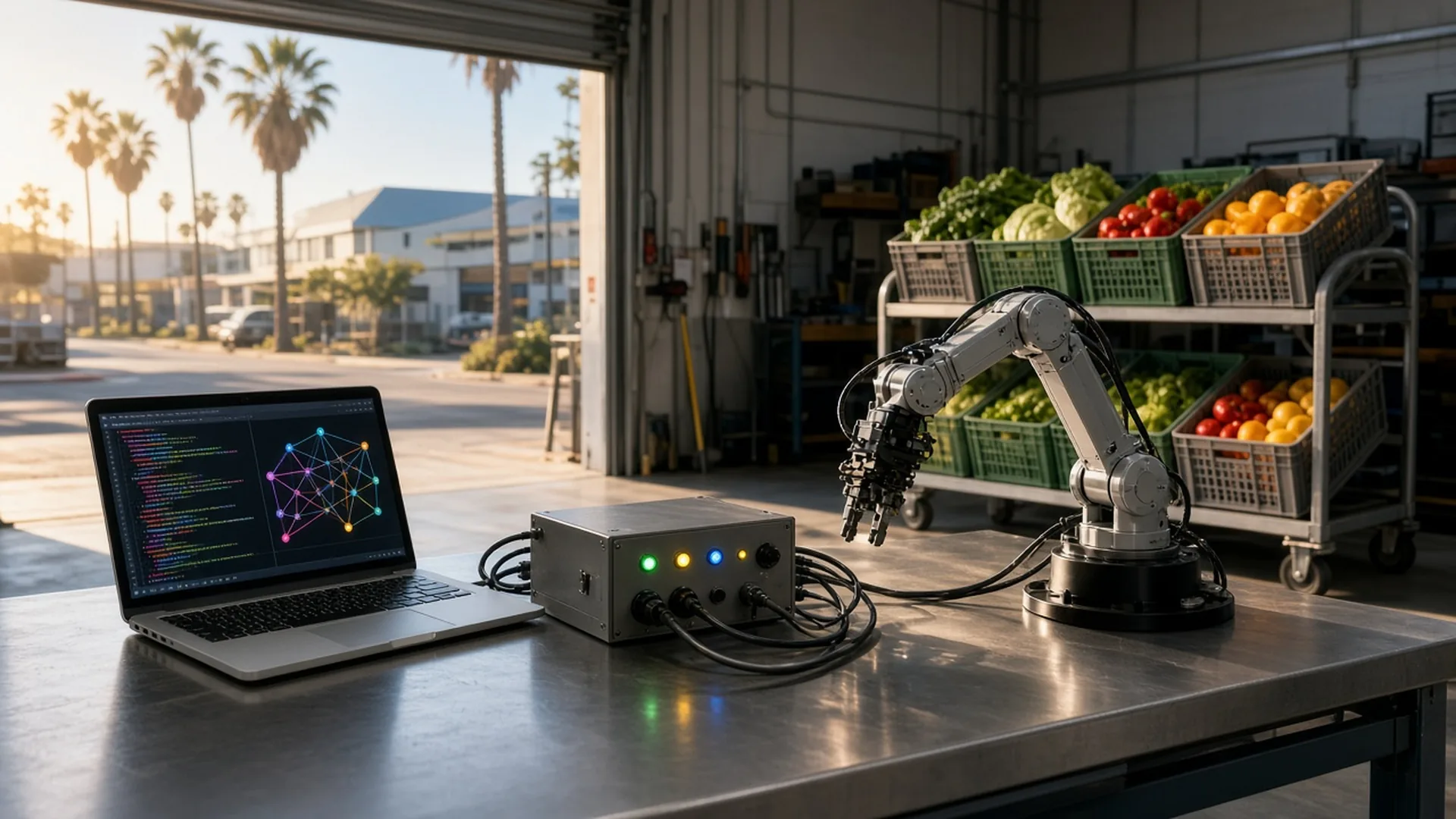
Look past the headline mega-rounds in Los Angeles this fall and a quieter pattern shows up in the early-stage deals. A cluster of young LA companies has raised seed and Series A money to put software, and especially AI, to work on very physical problems: factory controls, produce shipments, heart rhythms and leftover inventory. For founders building in the region, the mix says a lot about what local and national investors are willing to back right now.
Here is a look at several of those rounds, drawn from the weekly deal roundups at dot.LA and The LA Grind, and what they have in common.
The deals
Neuron Industries (Gardena), $10 million seed. The round was co-led by FCVC and Obvious Ventures, with Y Combinator, Thin Line Capital, Zee Prime Capital and Founder Factor participating. Neuron builds an AI-native industrial controller and development environment that lets engineers describe how a machine should behave in plain English, generate readable control code and test it before deployment, according to a company-provided profile in the Los Angeles Times. The founders formed the company in May and went through YC's El Segundo program this summer. Its early customers are other South Bay hardware startups building new factories.
Loamy, $6 million seed. Led by Zeal Capital Partners with LA investors Slauson & Co., Supply Change Capital and Amplify.LA, the round brings Loamy's total funding to $10 million, per dot.LA. Loamy sells an AI operations platform for the food supply chain, aimed at helping growers, packers and distributors cut waste and avoid rejected shipments.
StimCardio, $30 million Series A. The LA medical device company's oversubscribed round was led by Metis MedTech, with Catalyst Health Ventures and others. It plans to use the money for a pivotal study of an investigational wrist-worn therapy meant to reduce recurring atrial fibrillation after catheter ablation, and to prepare an FDA submission.
Offe Market, $3 million seed. Led by Slauson & Co., the round brings the off-price retail marketplace's total to $4.3 million. Offe helps fashion and lifestyle brands sell excess inventory, and it plans AI pricing and inventory tools, personalized recommendations and live shopping features.
Rendezvous Robotics, $20 million seed. LA firm MaC Venture Capital co-led this oversubscribed round with Toyota Ventures. The space startup is developing modular spacecraft whose components can assemble and reconfigure themselves in orbit, and will use the money to prepare flight demonstrations.
DrizzleX (Santa Fe Springs), $6.8 million Series A-2. Led by Israel Investment Fund Group, with some of the company's own customers investing too. DrizzleX makes water-management technology that helps property owners detect leaks and cut water use.
What the pattern says
AI is the tool, not the product. None of these companies is selling a chatbot. They use AI inside a product that touches something physical: a machine on a factory floor, a truckload of produce, a patient's heart rhythm. That framing, AI as a way to make an existing industry work better, is easier for investors to underwrite than a general-purpose model competing with the largest labs.
South LA County hardware keeps compounding. Neuron's story is a case study. Its founders came out of a Hawthorne manufacturing startup, met hardware peers through YC's El Segundo program and now count nearby factory builders as customers. The South Bay's density of aerospace, defense and advanced manufacturing talent is creating its own supply chain of startups that sell to each other.
Local funds are showing up early. Slauson & Co. appears in both the Loamy and Offe rounds, and Amplify.LA and MaC Venture Capital are in the mix. For founders, that is a reminder that LA-based seed investors with a sector thesis are often a faster first call than national firms.
Customers as investors is a signal. DrizzleX's note that customers joined its round is worth copying when it is true. Investors read a customer check as proof that the product works and that the buyer expects to keep using it.
Takeaways for LA founders raising now
- Lead with the operational outcome. These companies describe results in their customers' language: fewer rejected shipments, faster machine development, less water waste. If your pitch starts with your model, flip it.
- Use the ecosystem. Local accelerators and sector-specific LA funds are writing early checks. Map which ones have backed companies like yours before you send a single cold email.
- Show traction from the people who pay. Pilot customers, letters of intent and especially customer investment carry weight at seed.
- Plan for longer timelines in regulated or hardware markets. StimCardio's raise is tied to a pivotal study and an FDA submission, and hardware companies are spending on production. Raise enough to reach a real milestone, not just the next deck.
Funding announcements are self-reported and round details can change, so treat them as signals rather than a full market picture. But taken together, this fall's early-stage LA deals point in one direction: investors want software that makes the physical economy run better, and Los Angeles has the industrial base to build it.