

Torrance’s Northwood Space Hits $2B With a $375M Series C
Torrance satellite ground-network startup Northwood Space raised $375M Series C at a $2B valuation. What the Torrance factory and job plans mean for LA.
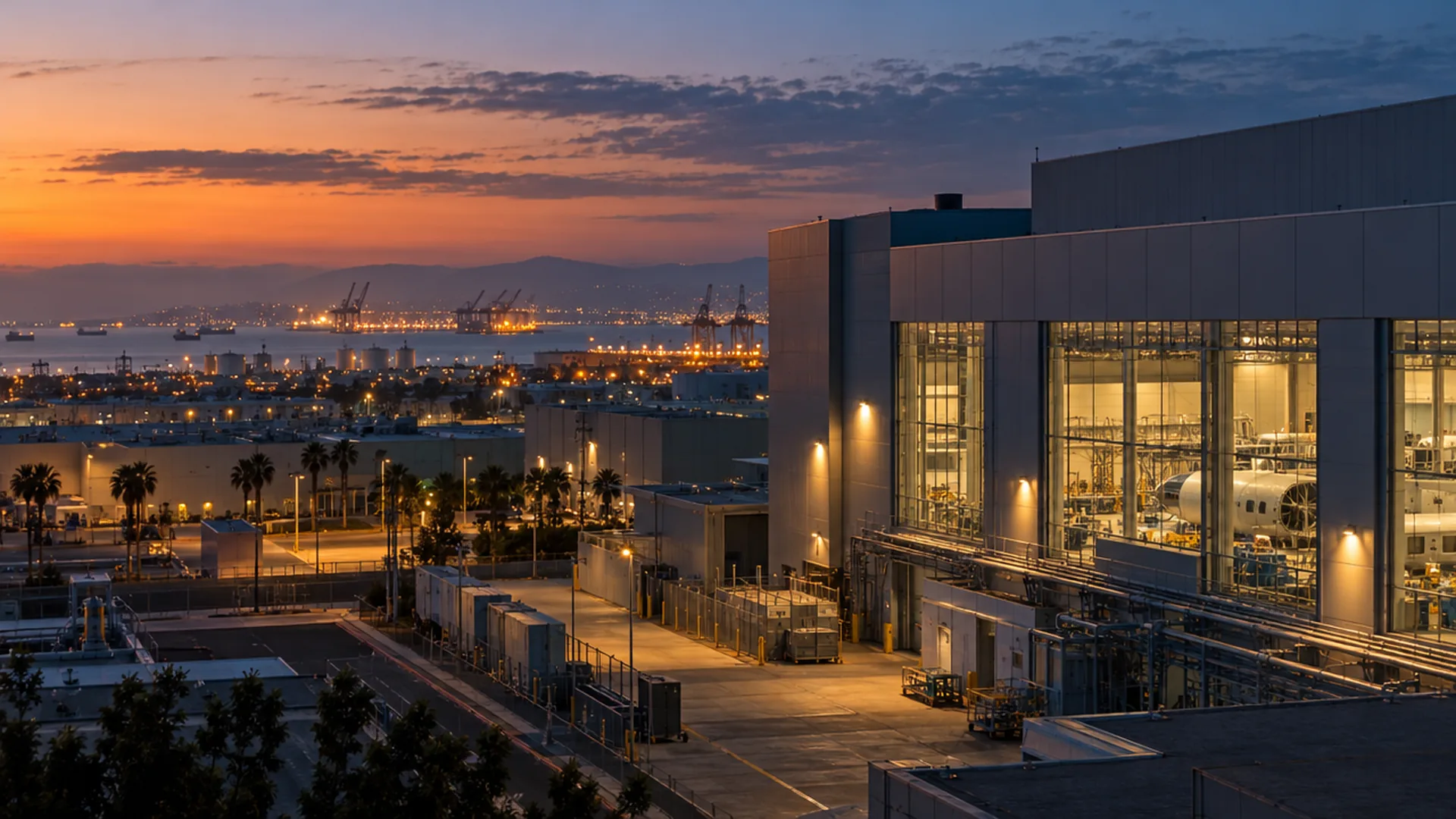
Torrance has a new billion-dollar hard-tech story — and it is built on antennas, not apps. Northwood Space said on Nov. 2, 2026 that it closed a $375 million Series C, with TechCrunch reporting a $2 billion valuation, to scale the shared ground network that connects satellites to Earth. The company’s own Series C post frames the raise as fuel for contracts, talent and global network buildout for commercial, U.S. government and allied missions.
For LA founders building physical infrastructure, Northwood’s last nine months are the real curriculum: factory first, shared network second, government and commercial customers in parallel.
The round: a16z, DFJ Growth and a credit facility
Andreessen Horowitz (a16z) and DFJ Growth co-led the Series C, with substantial follow-on from Washington Harbour Partners (Series B lead), Alpine Space Ventures, StepStone, In-Q-Tel (IQT) and others. A separate multi-year HSBC Innovation Banking credit facility will support working capital and network expansion.
That mix — growth equity, space specialists, an intelligence-community-linked investor and a bank credit line — is what scaling hardware looks like when you have real contracts and a manufacturing footprint to fund. Equity pays for the long build; credit helps when antennas and sites need cash between invoice and cash collection.
TechCrunch notes Northwood last raised a roughly $100 million Series B in January and previously won a nearly $50 million U.S. Space Force contract tied to the nation’s satellite control network — useful context for why a Torrance factory story can clear a $2B mark this fast.
What Northwood actually builds
Northwood designs and manufactures modular antennas in Torrance: Portal phased arrays for command and control and Prism high-throughput dishes for payload data. The company says that at full production it can build hundreds of antennas per year, with systems that ship by standard freight and need only flat ground, power and fiber.
The business model is infrastructure-as-a-network: operators book capacity on a shared multi-orbit ground network instead of spending millions on dedicated ground stations. Northwood also sells antenna systems directly to select customers — the same hardware that powers the shared network. Software and proprietary techniques combine multiple antennas into larger effective apertures; the company cites arraying 10 Portals to match the receive performance of a 20-foot dish, plus an API for searching, reserving and managing passes.
That is the founder lesson hiding in the product sheet: hardware plus software plus operations. The moat is not a single dish — it is a manufacturable system, a site playbook and a booking layer customers can trust.
Nine months of execution since Series B
Since the Series B less than nine months earlier, Northwood says it has:
- Deployed six multi-orbit-capable sites on two continents
- Demonstrated geosynchronous (GEO) command capacity from a commercial phased array in live tests, including work framed as a U.S. Space Force prototype path
- Developed and launched a high-throughput antenna system (Prism)
- Opened a 185,000-square-foot headquarters and factory in Torrance in September 2026, expanding manufacturing footprint more than fivefold
- Grown to more than 140 employees, with plans to add 400 jobs in Torrance and Washington, D.C. over three years across RF engineering, manufacturing, software and site operations
Northwood also says a new site can come up in about three months, and new antennas can go from truck arrival to live links in three to four hours — the kind of cycle time that turns a factory into a network growth engine.
What LA hard-tech founders should notice
- Factory scale is the fundraising story. The Torrance HQ/factory is not a vanity campus; it is the proof that Northwood can produce hundreds of units a year.
- Shared infrastructure beats one-off builds. Selling network capacity (and optional hardware) creates recurring use cases that dedicated ground stations cannot match for many operators.
- Government and commercial customers can coexist. Space Force-related work, commercial new-space operators and traditional satellite operators appear in the same customer narrative — diversified demand for the same manufacturing line.
- Jobs follow tooling. A +400 headcount plan across Torrance and D.C. is how physical-network companies turn capital into regional economic gravity.
- Credit facilities matter once you ship. HSBC’s facility is a reminder that Series C hard-tech often needs working-capital tools alongside equity.
The South Bay takeaway
Northwood’s Series C is a South Bay manufacturing signal as much as a space headline. Bridgit Mendler’s company is betting that the bottleneck in the satellite boom is on the ground — and that Torrance can build the antennas and network software to clear it. For LA founders building physical systems, the playbook is blunt: get a factory that can actually produce, sell a shared service customers prefer to owning infrastructure, and raise with investors who understand both government missions and commercial scale. The $2B valuation will get the clicks. The 185,000-square-foot floor and the +400 jobs are what change the LA hard-tech map.