

Lumaril’s $66M Series A Bets on AI for the Factories LA Already Has
Factory AI startup Lumaril, with an El Segundo office, raised $66M at a $400M valuation and gets paid on added output. What LA founders should learn.
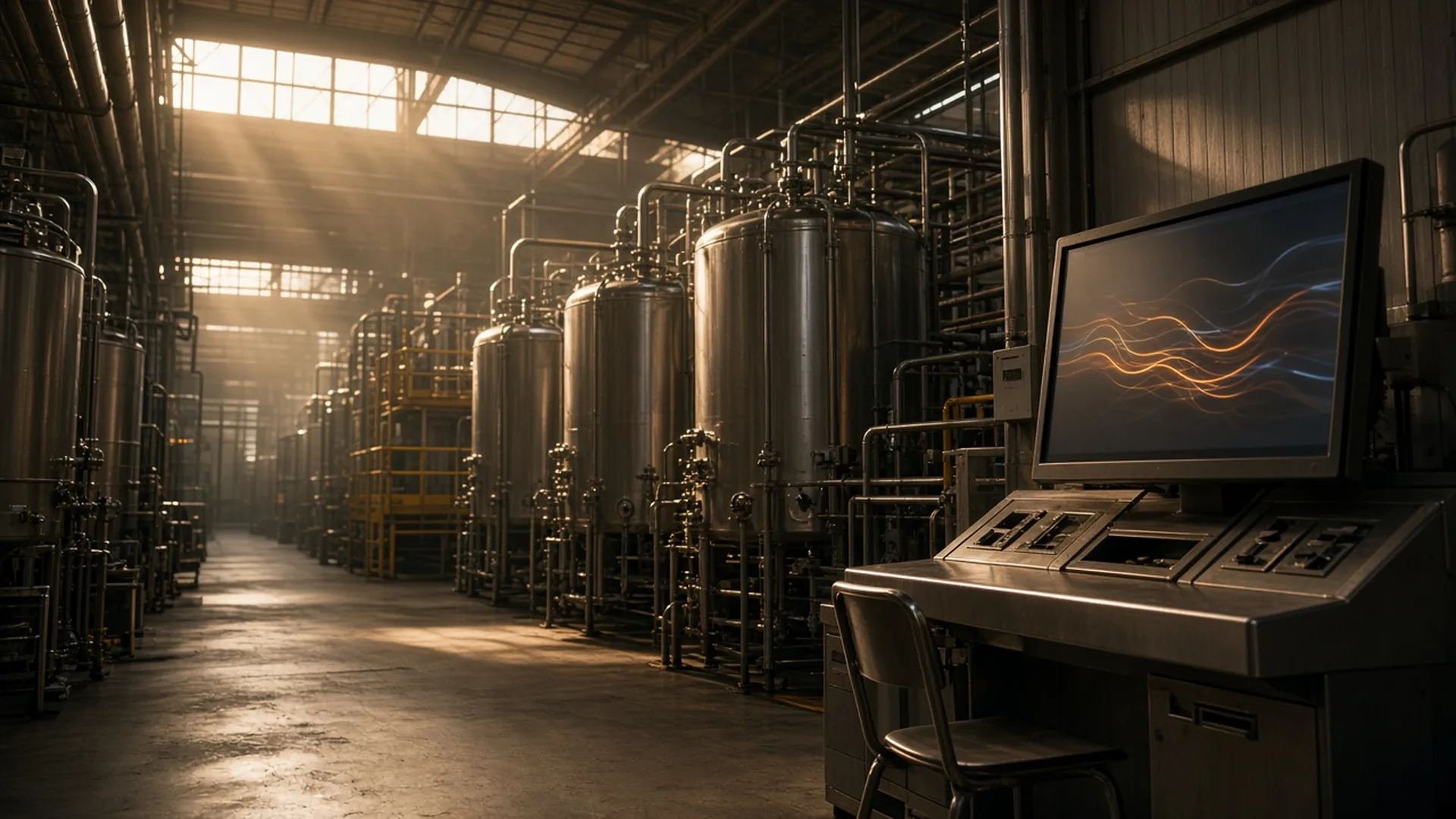
A factory-software startup with an office in El Segundo is betting that the fastest way to add industrial capacity is not to build new plants but to run existing ones closer to their limits. On October 27, 2026, Lumaril announced a $66 million Series A at a $400 million valuation, led by returning investor Elad Gil, with participation from Felicis, Koch Disruptive Technologies, Pax Ventures and seed co-leads Lux Capital and General Catalyst. The company says the round brings its total funding to $78 million. Law firm Fenwick, which represented Lumaril, confirms the amount and the investor list, and the Wall Street Journal reported the raise and valuation the same morning.
Lumaril's headquarters is in New York, but its own website lists a second office on Apollo Street in El Segundo — the same South Bay corridor that is home to a dense cluster of aerospace, defense and hardware startups. For Los Angeles founders, the round is a useful signal about where industrial AI money is flowing, and about what kind of business model investors will back in the physical economy.
What Lumaril says it does
Lumaril describes itself as an "industrial autonomy layer." According to the company, its software connects directly to the control systems a plant already runs, adds commodity audio and visual sensors where needed, and builds a continuously updated model of what is happening inside the facility. It then uses a mix of classical control methods and machine learning to decide on adjustments and, through a safety layer, changes setpoints and control logic to push throughput and yield higher.
The pitch is explicitly "no rip-and-replace." Instead of asking a manufacturer to install new equipment, Lumaril says it learns from how a plant's best operators already run the line. In the founders' announcement, they argue that the real bottleneck in many plants is tacit knowledge — the intuition senior operators use to balance hundreds of interacting settings — and that much of it is never written down and is retiring with the workforce.
The company lists target sectors including manufacturing, chemicals, biologics, oil and gas, agriculture and polymers. In the announcement, the founders say they have been learning beside operators at Ultra-Poly and The Arthur Companies. Those are the company's own descriptions; neither the announcement nor the coverage we reviewed publishes independent performance results from those sites.
The team behind it
Co-founders Mark Elliot and Ben Duffield both describe themselves on the company site as creators of Palantir's Foundry data platform; Elliot also served as Palantir's commercial chief technology officer and earlier worked as an engineer at Lockheed Martin. The company lists its head of operations as Kim Lear, a former Palantir public-sector lead and Zipline executive, and its head of business development as Steve Frost, who previously worked in mission operations at Anduril and served as a U.S. Marine Corps infantry officer.
That mix — enterprise data software plus defense-tech operators — is familiar in the South Bay, where Anduril alumni and aerospace engineers have seeded a wave of hardware-adjacent companies.
The business model is the real story
The detail most worth studying is how Lumaril says it charges. "We don't sell software. We sell production," the founders wrote, adding that the company is paid on the throughput and yield it adds.
Outcome-based pricing is a sharp contrast to the seat-based or annual-license SaaS model most software founders default to. It aligns the vendor with the customer's results, which can shorten a skeptical plant manager's buying cycle. It also creates hard questions: how a production baseline is set, who measures improvement, how weather, materials or demand swings are separated from the software's contribution, and what happens when output drops for reasons outside the vendor's control. Those terms are where a pay-for-results contract is won or lost.
Investors putting $66 million behind that approach at a $400 million valuation suggests they believe the measurement problem can be solved at scale. Whether it can is something the company will need to show through customer deployments.
What LA founders and operators should take from it
For industrial and hardware founders. Lumaril is another data point that investors are funding software aimed at existing physical assets, not just new factories. If you are building tools for aerospace suppliers, food processors, plastics shops or contract manufacturers around Los Angeles, the "no rip-and-replace" framing — work with the controls and people already there — is a pitch worth studying.
For founders weighing pricing. If your product moves a measurable operating number, consider whether some version of outcome-based pricing fits. Start by defining the baseline and the measurement method in writing before you sign, and decide which party carries the risk when outside factors move the result.
For LA manufacturers. Southern California still has a deep base of mid-sized plants. If a vendor offers to be paid on added output, ask how it connects to your control systems, what its safety layer can and cannot change without approval, who owns the operating data and models built from your plant, and how the contract handles disputes about attribution.
For talent. An El Segundo office for a company like this means more local demand for controls engineers, data engineers and field-deployment staff who can work on a plant floor. The company has not published local headcount figures, so treat any hiring as something to confirm on its site.
More information is at lumaril.com.