

Torrance Truck Charging Hub: What LA Drayage Carriers Should Know by Dec. 3
EV Realty broke ground on a 50-port megawatt truck charging hub in Torrance as a $300K-per-truck Port of L.A. incentive closes Dec. 3. What carriers can do.
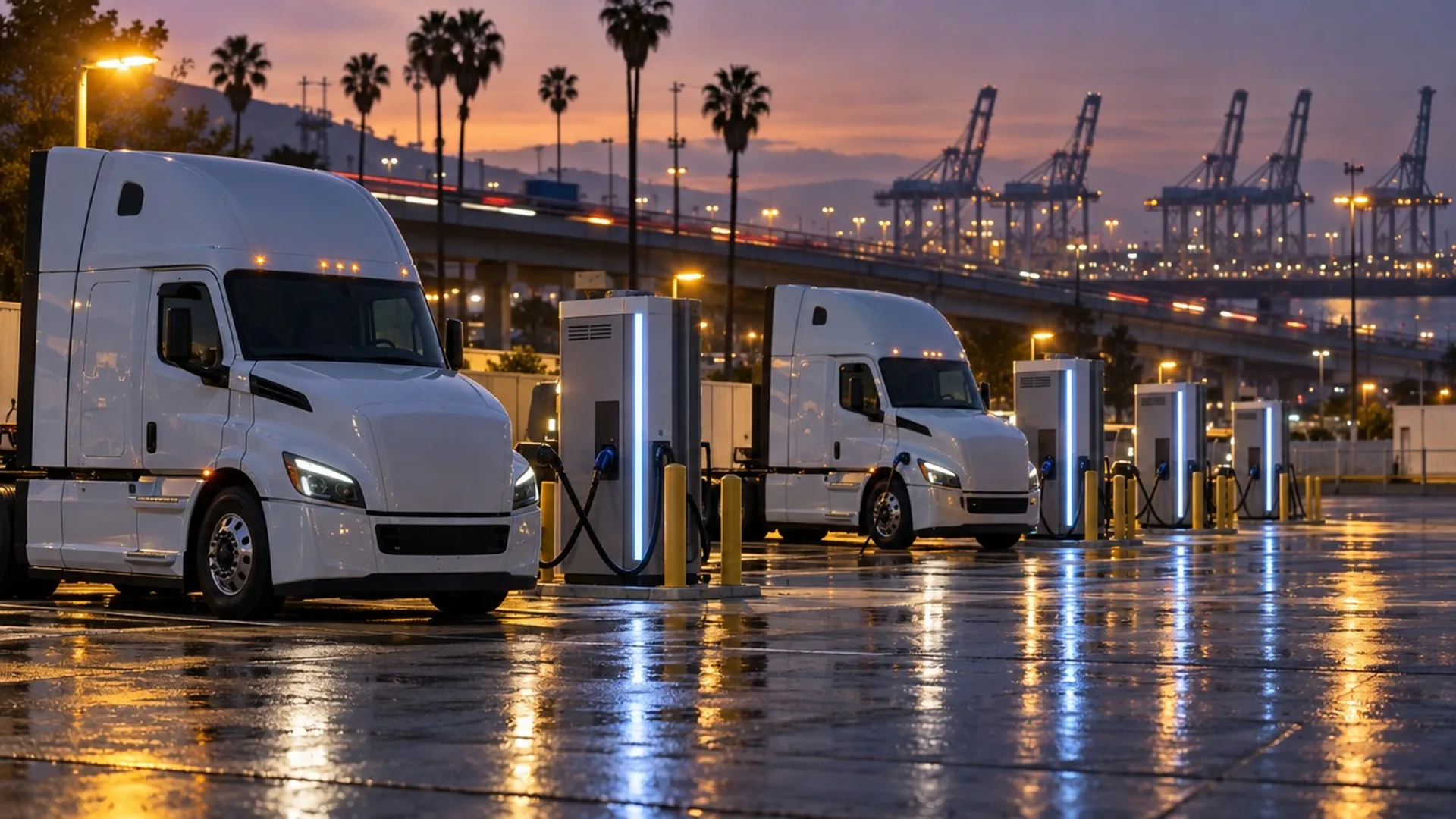
For small trucking companies that haul containers out of the ports of Los Angeles and Long Beach, going electric has never been only about the truck. It is about where to charge and who helps pay. This week brought news on both. EV Realty broke ground on a 50-port electric truck charging hub in Torrance, and the Port of Los Angeles' largest truck purchase incentive of the year closes on Dec. 3.
What is being built in Torrance
According to FreightWaves, EV Realty announced the groundbreaking on Tuesday, Nov. 17. The 9-megawatt site, on a 2.2-acre property at 18715 S. Western Ave. next to the 405 with a direct link to the 110, is scheduled to open to commercial fleets in mid-2027. It is the company's second Southern California hub, after a 76-port site in San Bernardino opened in April.
The design matters for operators. State transportation commission records cited by FreightWaves show 20 of the 50 ports will use the Megawatt Charging System (MCS) at up to 1.2 MW, with the other 30 being standard DC fast chargers at up to 350 kW. An earlier plan called for 60 lower-power ports, but that layout needed more room than the site had.
EV Realty CEO Patrick Sullivan said at the groundbreaking that megawatt charging could let a drayage operator run three, maybe four, port turns per truck per day from the site. That is the company's estimate, not a measured result, and it depends on trucks that are built to accept MCS charging.
The budget is $22.1 million. A $7.9 million state Trade Corridor Enhancement Program grant covers part of construction, and EV Realty is paying the remaining $14.2 million, FreightWaves reported. The opening date slipped from an earlier state schedule because of permitting delays at two outside agencies, including the city of Torrance. No fleet customers for Torrance have been named yet.
The Dec. 3 deadline
The more urgent date for carriers is Dec. 3. In July, the Port of Los Angeles opened a $75 million Zero-Emission Truck Purchasing Incentive Project for licensed motor carriers already in the Port Drayage Truck Registry. It pays up to $300,000 per battery-electric Class 8 drayage truck, with a maximum of $24 million per carrier, and applicants must commit to buying at least 10 trucks. The money comes from the U.S. EPA Clean Ports Program ($50 million) and the port's Clean Truck Fund Rate ($25 million). Proposals are due at 3 p.m. on Thursday, Dec. 3.
A Nov. 19 funding roundup from Inglewood-based fleet electrification company Zeem notes that leasing is not eligible for the port program and that grant money per truck cannot exceed 80% of its cost. The same roundup lists other programs that may fit smaller fleets: California's HVIP voucher program, which it says offers higher amounts for fleets of 20 or fewer trucks, and South Coast AQMD's WAIRE Mitigation Program, which it lists as closing Dec. 15. Because rules change and some money is first come, first served, confirm every number on the program's own page before you plan around it.
What small carriers should do now
These are our own suggestions, not program requirements.
Do the 10-truck math honestly. The port incentive is built for carriers buying at least 10 trucks. If that is beyond your fleet, don't force it. Look at the voucher programs aimed at small fleets instead, and talk to a dealer about what can be stacked.
Plan charging before the truck. A grant that pays for a truck does nothing if you have nowhere to charge it. Shared hubs like Torrance and San Bernardino are one answer for operators without their own yard power. If you do have a yard, ask your utility early how much capacity is available; grid upgrades can take longer than the truck order.
Ask the hub operators specific questions. Pricing, reservations, guaranteed time slots and what happens when a charger is down all matter more than the number of ports. Get those answers in writing before you commit routes to a site that is still being built.
Match the truck to the charger. The Torrance site's speed advantage depends on MCS. Before signing for a truck, confirm which charging standard it supports and how fast it can actually charge.
Watch the per-visit incentive. FreightWaves notes that the two ports proposed in September to pay zero-emission trucks $60 per terminal visit, up to $36,000 a year, for three years. That program has not launched, so treat it as possible upside, not part of your base budget.
The bigger picture
Electric trucks are still a small share of port traffic. FreightWaves cites figures showing 613 zero-emission trucks called at the Port of Long Beach in July, about 3.6% of the roughly 16,850 drayage trucks with access to the San Pedro Bay terminals. Charging sites near the terminals are a prerequisite for that number to rise, and the Torrance hub is one of the first designed around megawatt charging next to the ports. For the small trucking businesses that make up much of local drayage, the coming funding deadlines are worth a careful look, even if a decision on going electric is still a way off.
Sources: FreightWaves, Nov. 19, 2026; Port of Los Angeles, July 13, 2026; Zeem, Nov. 19, 2026.