

Made in California Label Is Free Until Dec. 31: What LA Makers Need to Qualify
California's Made in California label is free to join through Dec. 31, 2026. Who qualifies under the 51% rule and how L.A. makers can apply now.
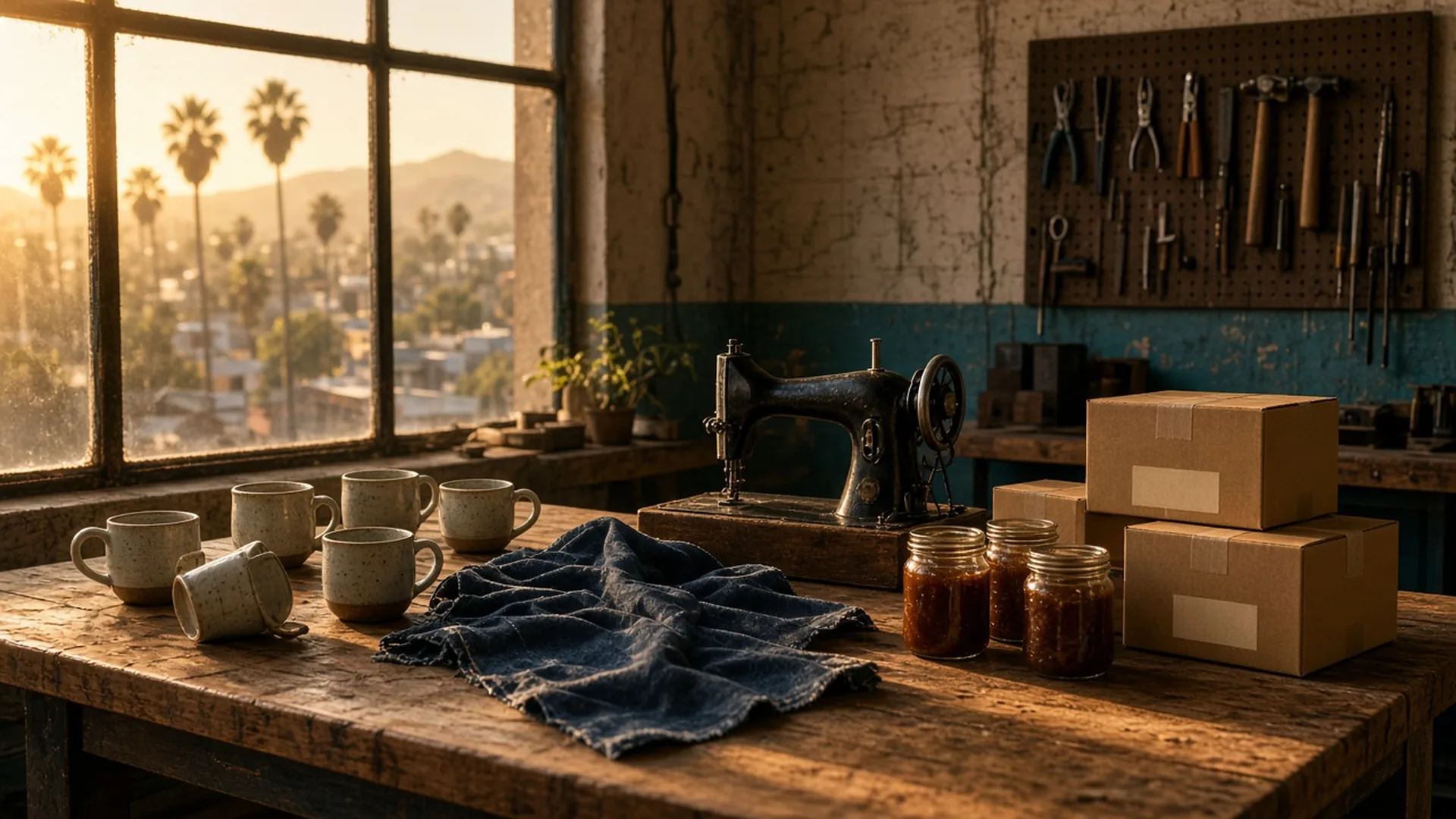
Los Angeles makes more than movies. From apparel cut and sewn near downtown to aerospace parts in the South Bay, food and beverage brands in Vernon and the San Fernando Valley, and small-batch cosmetics, furniture and ceramics in studios across the county, the region is full of companies that build physical products. A new state program wants to help those businesses turn "made here" into a selling point, and for a few more weeks it costs nothing to join.
What the program is
Made in California is a statewide labeling and marketing program run by the Governor's Office of Business and Economic Development (GO-Biz) and the California Office of the Small Business Advocate (CalOSBA). Approved manufacturers can put an official Made in California label on approved products, packaging, websites and marketing materials, and they can be listed in a Made in California Product Directory aimed at buyers, retailers and state and federal contractors.
The state has been promoting the program this fall. In an Oct. 14 announcement, the governor's office said the program is meant to help manufacturers reach new customers, pursue contracts, attract capital, enter export markets and compete for shelf space. The same release noted that small manufacturers make up roughly 89% of the state's manufacturing firms, and that many of them lack the marketing budgets larger companies have.
The deadline that matters
According to the program website, fees are waived through Dec. 31, 2026. After the waiver ends, the two-year certification costs $75 for businesses with fewer than 20 employees, $250 for businesses with 20 to 500 employees and $500 for businesses with more than 500 employees. Those are modest amounts, but for a small maker, joining free now and locking in a two-year term is an easy win.
The program says the application takes about 15 to 20 minutes, technical support is available, and applicants are not charged anything before approval. If approved, the business signs a licensing agreement with GO-Biz, and the two-year term starts when that agreement is executed.
Who qualifies
Eligibility is about where the work happens, not where the headquarters is. According to the program FAQ, a business must be legally authorized to do business in California and conduct qualifying manufacturing in the state. A product must be "substantially made in California," which the program defines as adding at least 51% of its wholesale value in California through manufacture, assembly, fabrication or production.
GO-Biz evaluates that threshold using three kinds of costs tied to the specific product:
- Direct labor cost, meaning pay for workers directly involved in production and their supervisors.
- Direct material cost, such as raw materials, parts and components. Packaging does not count.
- Fixed overhead cost, such as rent, insurance and depreciation. Research and development and packaging do not count.
Brands that use a contract manufacturer can still qualify if the products are made in California, sold as final goods and meet the 51% threshold. That matters in L.A., where many apparel, beauty and food founders rely on local co-packers and sewing contractors rather than their own factories.
Businesses can be ruled ineligible if they do not manufacture, fabricate, produce or assemble in California, or if they submit incomplete or misleading information. There is no appeal, but the program says a business can reapply if its situation changes.
How L.A. makers can get ready this week
Pick the right products. The label applies to approved products, not your whole company. Start with the items where most of the value is created locally, such as garments cut and sewn in L.A. from domestic fabric, or a sauce produced at a Vernon co-packer.
Pull your cost numbers before you start. Have per-unit labor, materials and overhead figures for each product handy. If you rely on imported components, run the math first; a product built mostly from imported parts may not clear 51%.
Get documentation from your contract manufacturer. If someone else makes your product, ask them for a short letter or invoice detail confirming where production happens. You will want it if GO-Biz asks questions.
Plan how you will use the label. Think about where it would actually move sales: product pages, wholesale line sheets, trade show booths, farmers market signage and pitches to retailers who like local sourcing. Read the program's brand guidelines before you redesign packaging.
Keep your listing current. The licensing agreement requires you to tell GO-Biz promptly about changes to your business information, and the state can revoke a license that was based on inaccurate information. If you move production out of state, the label has to come off.
The bigger picture
A label will not fix tariffs, rent or labor costs. But for small L.A. manufacturers competing against cheaper imports, a recognizable state mark and a spot in a directory used by buyers and public-sector contractors is low-cost visibility. With fees waived only through Dec. 31, the practical move is to check eligibility now, before the holiday rush eats the rest of the year.
Sources: Made in California program site and FAQ; Office of the Governor, Oct. 14, 2026.