

LA County Opened 30 Raw-to-Cooked Carts: How Street Vendors Apply
County DEO opened applications for 30 new raw-to-cooked sidewalk carts, lifting the pool to 341. Who qualifies and how to apply while carts last.
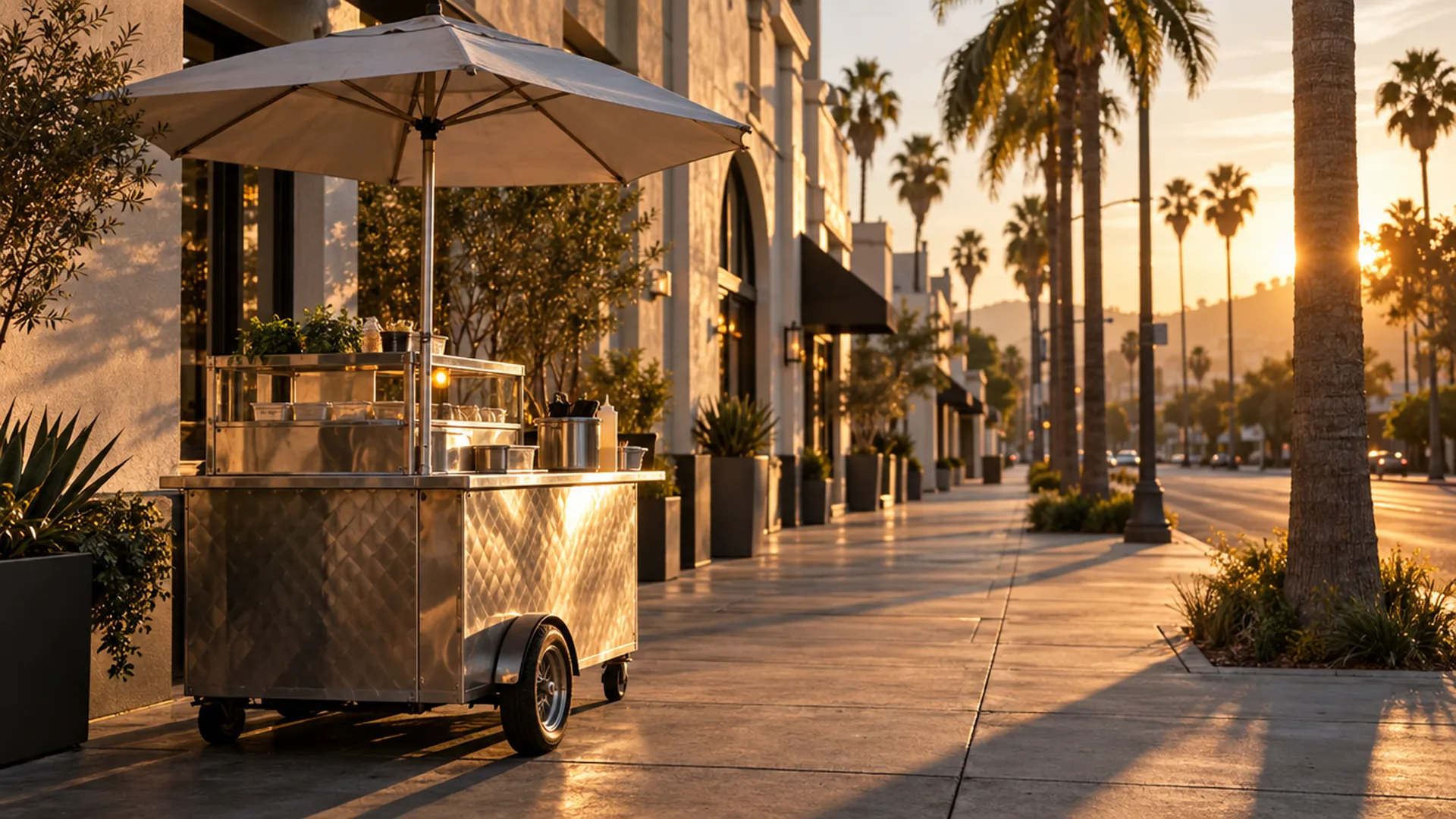
Los Angeles County is taking applications again for something street-food vendors have asked for in plain language: a cart that can legally cook raw ingredients on the sidewalk. On October 16, 2026, the Department of Economic Opportunity said it had opened applications for new raw-to-cooked carts through its Sidewalk Vending Cart Program. The expansion adds 30 of those carts and brings the total pool to 341 code-compliant food carts for permitted vendors in unincorporated Los Angeles County and the City of Los Angeles.
The carts are provided at no cost to qualified vendors, but not on the day you click submit. Awardees must finish program requirements and obtain the applicable health and vending permits before they take ownership. Cart inventory and any companion grants are limited and go out while supplies last.
Why the new cart type matters
Second District Supervisor Holly J. Mitchell put the operational problem in one sentence in DEO’s release: “Until today, vendors who cook from raw ingredients couldn’t get a health permit because there was no approved cart for them to use.” The raw-to-cooked cart is built for that gap. DEO describes it as a specialized model with systems to store, handle and cook raw proteins and other raw ingredients on site, including upgraded ventilation, temperature controls, and handwashing and ware-washing capability.
The rest of the fleet is still in play. The program page lists five Public Health-approved cart types for Compact Mobile Food Operations: cold-hold carts for commercially prepackaged ice cream; cut-fruit carts; hot-holding carts for precooked items prepared in a permitted kitchen or commissary; integrated grill carts for reheating those items; and the new raw-to-cooked model. Not every type may be available when you apply. DEO says applicants will be told what is in stock.
Grants are separate from the cart
A cart award and a cash award are not the same thing. Food vendors in unincorporated Los Angeles County who are conditionally awarded a fruit, hot-holding, cold-holding or integrated grill cart — specifically not the raw-to-cooked model — are screened for a $5,000 grant intended to cover operating costs and permitting fees. DEO’s examples include a Sidewalk Vending Registration Certificate, a CMFO health permit, commissary space and equipment.
Merchandise vendors who sell goods only (no food or drinks) in unincorporated areas can apply for technical assistance and a grant of up to $500. Those applications run through DEO’s Small Business Mobility Fund page, not the food-cart form. Grant funding is limited.
DEO is also pairing equipment with help. In partnership with Inclusive Action for the City, the department says each food-cart applicant can get one-on-one assistance on permitting steps, including food-handler training, a 75 percent CMFO permit subsidy through DEO, and help finding commissary space or applying for a Microenterprise Home Kitchen Operation permit through Public Health.
DEO’s October 16 announcement also described additional criteria for the program and grants serving unincorporated-area vendors, including at least 12 months in operation, sole ownership and gross annual household income of $75,000 or less. The public program page, updated for the October expansion, lists a longer documentation checklist and geographic rules that also cover City of Los Angeles vendors. Read both pages before you spend an afternoon on forms.
Who should apply, and what happens next
According to DEO’s eligibility section, applicants must be at least 18, live in Los Angeles County, and operate a self-employed food-vending business (non-prepackaged) in unincorporated Los Angeles County or the City of Los Angeles. You may not apply on behalf of an employer, and you may not operate more than one permitted cart from a location at a time, including the awarded cart. City of Los Angeles operators must also document COVID-19 financial impact, because that portion of the program uses federal American Rescue Plan Act recovery funds. Applicants cannot have already received a code-compliant cart or equivalent equipment from another public source.
You will also need to show that you can transport and store a cart under California health rules, including photos of storage space, plus standard documents such as a California seller’s permit and photo ID.
Applications first opened on January 12, 2026, and the raw-to-cooked expansion is dated October 13, 2026 on the program page. DEO reviews applications received by the end of each month against that month’s available carts. If too many applicants share the same score, the county uses a lottery; applications that are not selected roll forward until the carts are gone. Eligibility notices go out in about two to four weeks, and DEO estimates the full path from application to cart distribution can take up to eight weeks.
How to get help this month
Food vendors apply on the cart program page. Merchandise vendors use the mobility fund page. For application help, DEO lists Inclusive Action for the City ((323) 604-9765), the DEO Office of Small Business ((844) 432-4900 or sidewalkvending@opportunity.lacounty.gov), and Initiating Change in Our Neighborhoods in Pacoima ((818) 647-9704).
A free cart does not replace a health permit, a vending registration or a plan for storage and transport. What the county has put on the table is the missing piece for vendors whose menus start with raw ingredients. If that is your business, apply while the 30 new carts and the remaining pool are still being awarded.