

LA Ale Works Heads to Main Street: 4 Lessons for Growing LA Founders
Los Angeles Ale Works is taking over a former JuneShine taproom in Santa Monica. Lessons on second-generation space, licensing and selling direct.
When a business closes, the space it leaves behind can be a head start for the next owner. That is the bet a Hawthorne brewery is making on Santa Monica's Main Street, and its approach holds practical lessons for any L.A. founder thinking about a second or third location.
The move
Los Angeles Ale Works is taking over the former JuneShine tasting room at 2914 Main St. in Santa Monica's Ocean Park neighborhood. The hard kombucha brand closed that outpost at the end of August. In a Nov. 17 interview with the Santa Monica Sun, managing partner Andrew Fowler said the brewery is targeting a February or March 2027 opening and described the site as the payoff of a four-year search for a Main Street home. The Sun counts it as the company's fourth location, after its Hawthorne brewery and taproom and taprooms in Culver City and Hermosa Beach.
The Santa Monica Mirror reported that a California Department of Alcoholic Beverage Control notice appeared in the storefront window in early November, naming Los Angeles Ale Works LLC as the applicant for a Type 23 small beer manufacturer license. Hoodline also covered the plans on Nov. 24. Fowler told the Sun the bigger variable now is that state license, which is still pending.
The company has a classic local origin story. According to the Sun, it began in 2010 as a home brewer's project, raised about $38,000 on Kickstarter in 2013 and opened its Hawthorne flagship in 2017.
Lesson 1: A second-generation space can save months
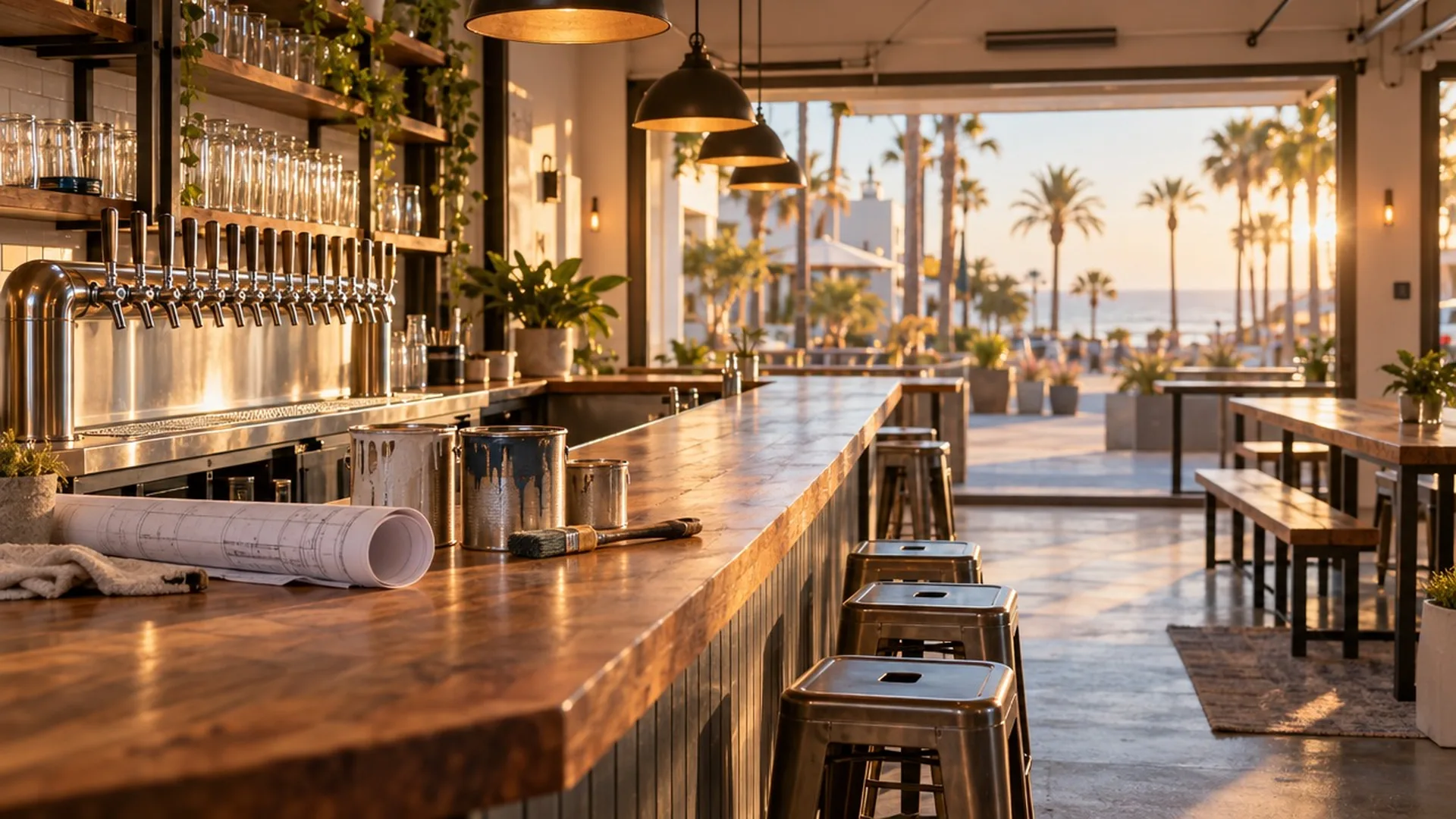
Fowler told the Sun the Main Street space needs a refresh rather than a rebuild. JuneShine left it in good shape and shared its old plans, so the to-do list is mostly paint, furniture and new draft lines.
For any food or beverage founder, that is the dream scenario. Build-outs for bars and restaurants are expensive and slow, especially plumbing, grease or drain work, electrical upgrades and anything that triggers new permits. Taking over a space that was built for a similar use can cut both cost and time. Before you sign, though, verify what you are inheriting. Ask for the prior tenant's plans and permit history, have a contractor inspect the equipment and systems, and confirm the city's approvals for that use still fit your concept.
Lesson 2: Licensing sets the calendar, not the lease
The lease may be signed, but in alcohol the opening date belongs to the regulator. A public notice posted in the window is just one step in the state's review, and the time it takes can vary. The practical takeaway is to plan your cash around a realistic licensing timeline. That means budgeting rent for months before you sell anything, negotiating free rent or a delayed rent start tied to licensing where you can, and keeping your staffing plan flexible until the approval date is clear.
The same logic applies outside of beer. Health permits, conditional use permits and building sign-offs often decide when an L.A. business opens.
Lesson 3: Own the customer relationship
One figure from the interview stands out. Fowler told the Sun the brewery sells roughly 70% of what it makes through its own bars, and argued that this business is not captured by the retail checkout data often cited in stories about the beer industry.
That is a reminder for any maker. Selling direct through your own taproom, shop or website usually brings better margins, better data about what customers want and more control over the experience. Each new location is not only another storefront. It is another channel the company controls, in a new neighborhood with its own regulars.
Lesson 4: Neighbors can be allies
Main Street is not empty of competition. The Sun noted that Exodus Beer Shop recently opened on Pico Boulevard and that the Santa Monica City Council recently authorized a lease for Santa Monica Brew Works on the Pier. Fowler said he does not see fellow independent brewers as rivals, pointing to the Brewers Guild and to Hermosa Beach, where Ale Works operates next to another brewery.
For small businesses, clusters often help more than they hurt. A strip known for good beer, coffee or tacos draws more visitors than one lonely shop. Joining a trade group, cross-promoting events and sharing foot traffic can make a whole corridor stronger.
The bottom line
Los Angeles Ale Works is not opening until 2027, and the license still has to come through. But the playbook is already visible: wait for the right site, take advantage of a space built for your use, plan around the regulator's calendar, keep selling direct and treat nearby independents as partners. Those moves translate to almost any L.A. founder ready to grow beyond a first location.
Sources: Santa Monica Sun, Nov. 17, 2026; Santa Monica Mirror, Nov. 18, 2026; Hoodline, Nov. 24, 2026.