

Creators Already Have an Audience. A Signature Talk Turns It Into a Business.
LA creators and media founders build audiences online. Speakpreneur's Paul Getter on why a live signature talk turns that audience into revenue.
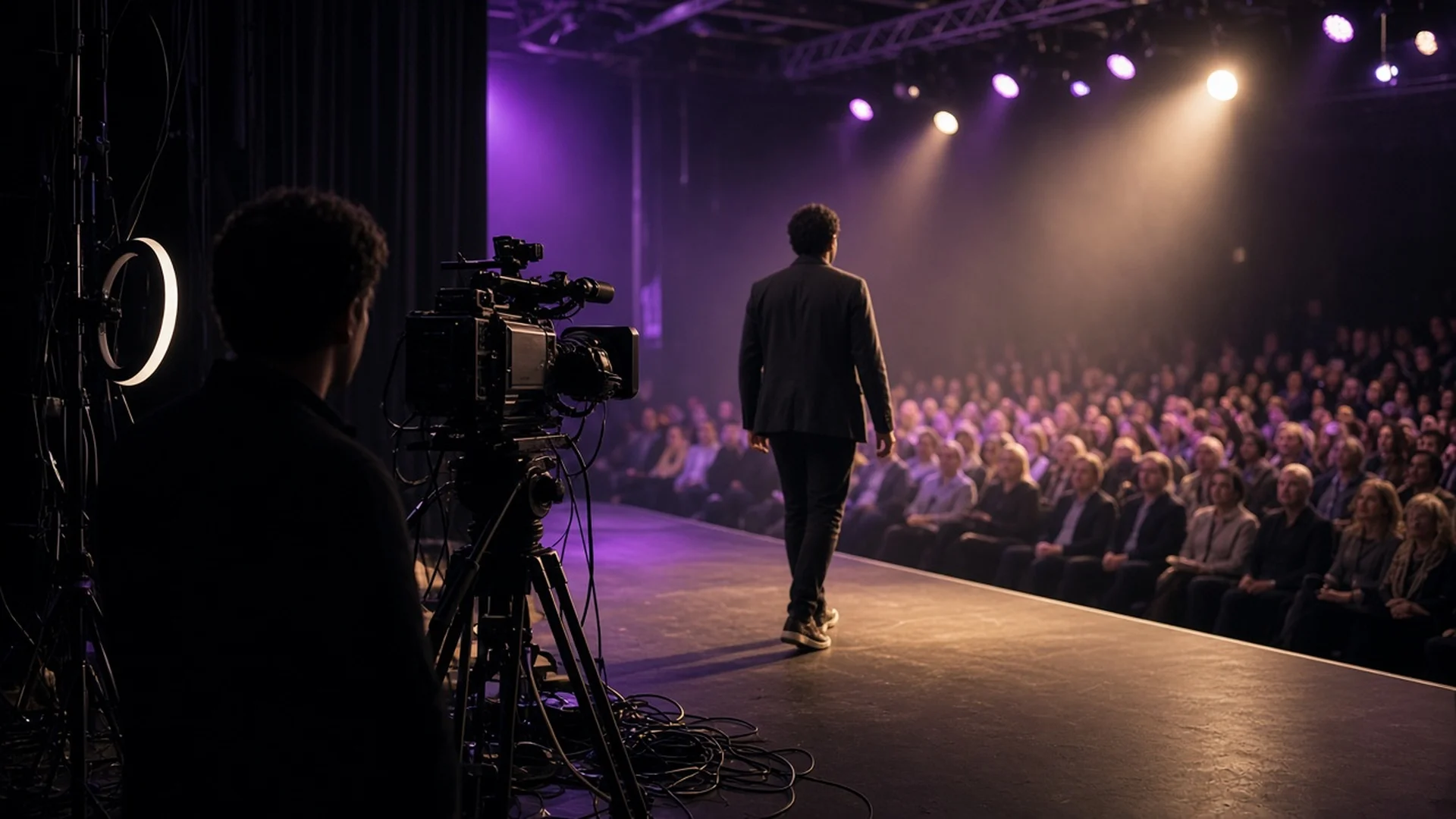
LOS ANGELES — Los Angeles has no shortage of people who know how to perform. Actors, YouTubers, podcasters, streamers, producers and the founders building companies around them all understand lighting, pacing and hooks. Strangely, many of them freeze at the idea of giving a 30-minute keynote to a room of executives.
Paul Getter thinks that's a missed opportunity. Getter is the founder of Speakpreneur, a Naples, Florida–based company that coaches entrepreneurs on public speaking, and he argues that creators and media founders are among the best-positioned people in the economy to profit from a signature talk. They just need to stop thinking of speaking as separate from their content.
Followers Are Rented. Rooms Are Owned.
Every creator has lived through an algorithm change that cut their reach overnight. A platform audience is real, but it's borrowed. A live room is different: the people in it chose to be there, they're paying full attention, and they can be invited into a direct relationship by email, text or a sign-up page.
In Getter's framing, a signature talk is how a creator turns borrowed attention into owned relationships. The talk is the reason to gather people. The follow-up is where the business gets built.
Your Content Is Already a Talk Draft
Creators have an advantage most founders don't: years of material that's already been tested on an audience. The video that took off, the series that sparked debate in the comments, the behind-the-scenes story fans keep asking about are all proof of what resonates.
Getter encourages creators to mine that archive. Find the one idea underneath your best-performing content, then build a talk around it: a clear point of view, two or three stories that prove it, and a practical takeaway. What feels like starting from scratch is often just editing.
In Getter's view, most creators don't have a content problem so much as a structure problem, and a signature talk gives that content a backbone.
Brands and Buyers Want a Point of View
The commercial case goes beyond fan engagement. Many creator and media businesses sell to brands, studios, agencies and corporate clients, and those buyers want proof of expertise. In the 2024 Edelman–LinkedIn B2B Thought Leadership Impact Report, 73% of B2B decision-makers said thought leadership is a more trustworthy basis for judging a company than its marketing materials. The same study found that about nine in ten are more receptive to outreach from companies that consistently publish it.
For a creator pitching a brand partnership, being "the person who gave that talk on Gen Z attention spans" is a stronger opening than a media kit.
One Talk, Fifty Assets
This is where LA's production know-how pays off. Getter advises treating every talk as a shoot:
- Multi-camera capture for a full-length version and a highlight reel.
- Short vertical clips of the strongest lines for Reels, TikTok and Shorts.
- Audio that doubles as a podcast episode.
- A written recap for a newsletter or LinkedIn article.
- Photos that sell your next booking better than any headshot.
One well-produced talk can feed a content calendar for weeks, and every clip points back to the offer.
The TEDx Question
Many creators dream of a TEDx talk, and with more than 4,000 TEDx events held each year, the opportunities are real. But TED's rules also limit how TEDx footage can be used: speakers can't promote their own products or businesses, and the rules restrict how much of a talk can be excerpted and reposted. Creators should treat TEDx as a credibility play, not a content pipeline, and keep a separate business keynote they fully control.
Where the Money Is
For creators and media founders, Getter sees several revenue paths in a signature talk: paid keynotes at brand and industry events, workshops and courses built from the talk's framework, consulting and agency deals that start in the Q&A, and live events the creator hosts. The common thread is ownership. The creator who owns the stage, the list and the footage isn't at the mercy of the next algorithm update.
Why Performers Still Get Stage Fright
Creators are often surprised by how different a live room feels from a camera. There are no retakes, no editing and no chance to cut the slow parts. The feedback is instant: you can feel a room lean in or tune out in real time. And the Q&A, the moment many business deals actually start, can't be scripted.
Getter's approach treats this as a skill to train, not a personality trait. Rehearse the talk out loud, start to finish, many times before giving it. Test it first in small, low-stakes rooms such as a coworking meetup, a friend's company offsite or a local creator group, before taking it to a big industry stage. Prepare answers to the five questions you're most likely to get. And plan the first 60 seconds word for word, because that's where nerves hit hardest.
For people who already know how to hold a camera's attention, the jump to a live room is shorter than it looks. It just takes a different kind of practice.
In a city built on storytelling, the next move for many creators may be to step off the feed and onto the stage.
Upcoming Speakpreneur Live Trainings
Creators and founders who want help building a signature talk can join Speakpreneur at these upcoming events:
- Philadelphia (2-Day Workshop): Nov. 6–7, 2026 — Tickets
- Austin (2-Day Workshop): Nov. 13–14, 2026 — Tickets
- Arlington (Message to Money Mastermind): Nov. 20, 2026 — Tickets
- Dubai (2-Day Mastermind): Dec. 3–4, 2026 — Tickets
- Milwaukee (2-Day Workshop): Dec. 18–19, 2026 — Tickets
More at speakpreneur.pro. Questions: support@speakpreneur.com.