

AI-Faked Refund Photos Hit an LA Pizzeria: How Restaurants Can Fight Back
Masa of Echo Park beat an AI-altered burnt-pizza refund claim with kitchen footage. How LA restaurants can protect delivery payouts and dispute error charges.
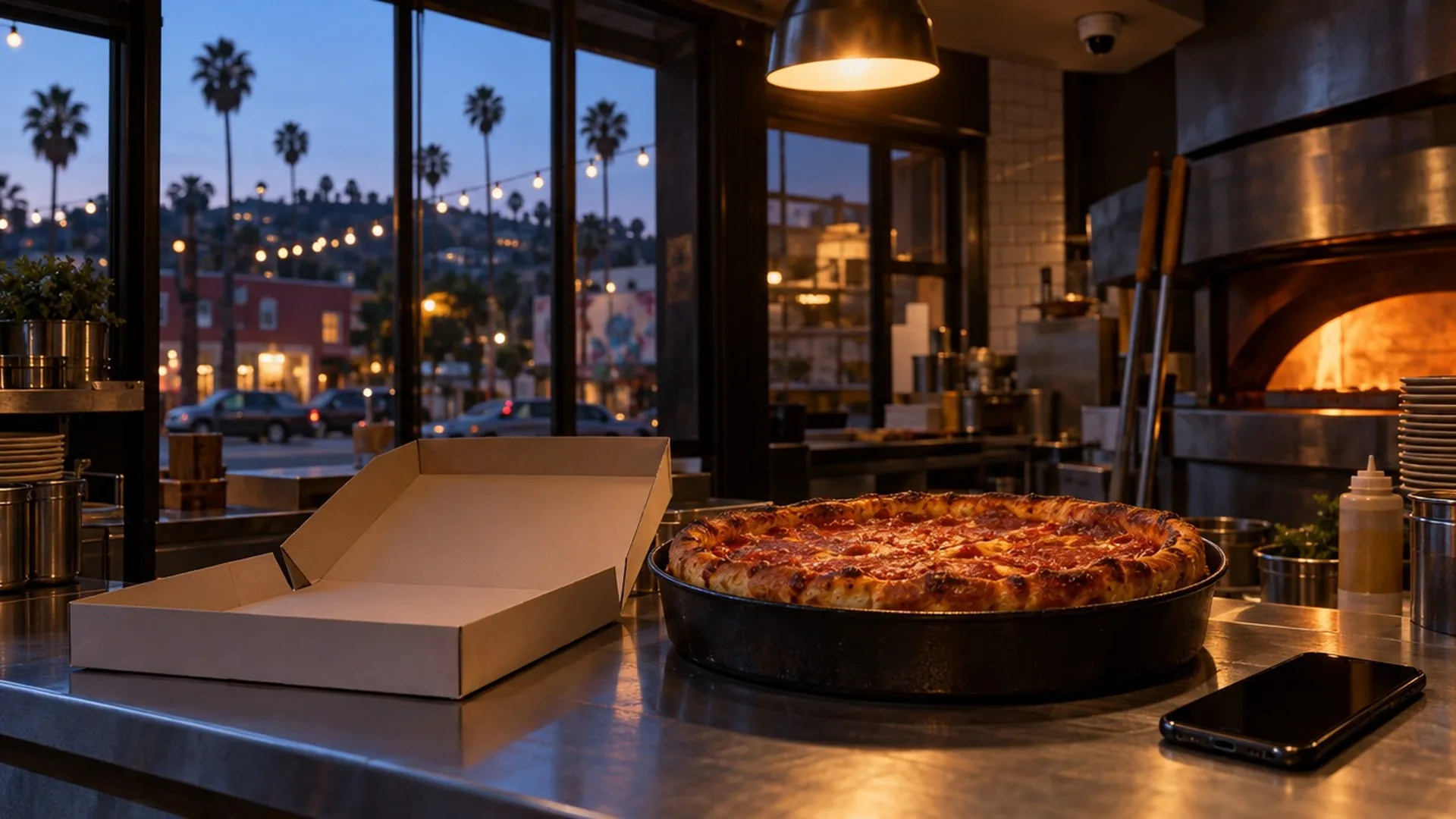
A longtime Echo Park pizzeria has become a cautionary tale for every Los Angeles restaurant that takes delivery orders. Masa of Echo Park says a customer used an AI-altered photo to claim a pizza arrived burned and demand a refund. The restaurant pushed back and got the refund reversed. The way it did that is a playbook other operators can copy.
What happened at Masa
According to KTLA's reporting as summarized by Patch, a DoorDash customer ordered a pie from Masa and then sent in a picture of a badly charred pizza along with a refund demand. Owner Rhonda Reynolds was suspicious. Masa is known for Chicago-style deep-dish, and as LA Material pointed out, a two-inch-tall pie loaded with cheese and sauce is very hard to burn by accident.
Reynolds ran the image through a consumer AI-detection app, which rated it 96% likely to be AI-generated, and then pulled the kitchen's security footage of that order. PetaPixel reported that the video showed the pizza coming out of the oven and going into a labeled box looking normal. The refund had already been issued, but the restaurant disputed it and it was reversed, according to those reports.
Reynolds told KTLA it was the first AI-related scam she had seen in more than two decades in business. She also said the bigger worry is time: a busy restaurant cannot afford to spend its days fighting fake complaints.
Why this matters for LA operators
Image editing that once took skill now takes a short text prompt. That changes the math on refund fraud for any business that settles complaints by photo, from delivery restaurants to online sellers and service businesses. A single bad refund is small. A pattern of them, plus the platform fees and the staff time to fight them, is not.
It also matters because many refunds come out of your payout. DoorDash's merchant help page says that when a customer reports an item as missing, incorrect or poor quality, DoorDash refunds the customer and may charge the restaurant anywhere from 25% to 100% of the item price plus tax, depending on severity. For a wrong order handed to a Dasher, it says the charge can be 100% of the subtotal plus tax, net of commissions.
What the platform says it already does
DoorDash lists several fraud protections on that same page. It asks customers to submit photos and comments as evidence and requires them from customers its systems flag. It says it absorbs the cost when errors are reported 72 hours or more after delivery. It also says customers with high refund rates get warnings, have their requests manually reviewed, and are denied when suspicious patterns show up.
Those protections help. But the Masa case shows that a photo can now be the problem, not the proof.
A practical defense plan
None of this needs new software. It mostly needs habits.
- Know the dispute rules. DoorDash says you can dispute an error charge in the Merchant Portal under Financials, then Transactions, filtered to "Error charge." You need Admin or Store Manager access, and the delivery must be within the last 14 days, or you have to go through support. The platform says disputes are usually resolved within a few hours.
- Check charges weekly. With a 14-day window, a monthly review is too slow. Put a recurring error-charge report on someone's calendar.
- Keep camera footage long enough. Masa won because it had video of the order. Make sure your system keeps footage at least as long as your dispute windows, and that a manager knows how to find a clip by time and order.
- Make the bag tell the story. DoorDash recommends labeling bags with the customer name and order number and checking items off the receipt. A labeled box in view of a camera is exactly what helped Masa.
- Consider a quick photo at handoff. For high-value or frequently disputed items, a staff photo of the finished order before it is sealed gives you a time-stamped record of your own.
- Look at the customer's history. DoorDash says the portal shows how long a customer has used the platform and how often they order from you. A brand-new account with a dramatic complaint deserves a closer look.
- Treat detector scores as a clue, not a verdict. AI-detection apps can be wrong in both directions. Use them to decide whether to dig deeper, then rely on your own footage, timestamps and records.
- Do not outsource the portal. DoorDash says letting third parties into the Merchant Portal or file disputes for you violates its terms, so handle disputes in-house.
If you sell on Uber Eats, Grubhub or your own ordering site, check each platform's merchant dispute process and deadlines. They are not the same, and the clock starts at delivery.
The bigger picture
Masa's story spread quickly because it hit a nerve. Small businesses are already squeezed by labor costs, rent and platform fees. Fraud that takes seconds to create but minutes or hours to disprove is a real cost.
The good news is that the oldest tools still work. Clear records, a camera pointed at the pass, labeled bags and a regular habit of checking charges gave one Echo Park pizzeria the evidence it needed. Most LA restaurants can put the same system in place this week.