

Vacant to Vibrant: How LA's DTLA Storefront Pilot Works for Owners
LA's $500K Vacant to Vibrant pilot matches entrepreneurs with empty DTLA storefronts and rent help. How it works and how owners and landlords can sign up.
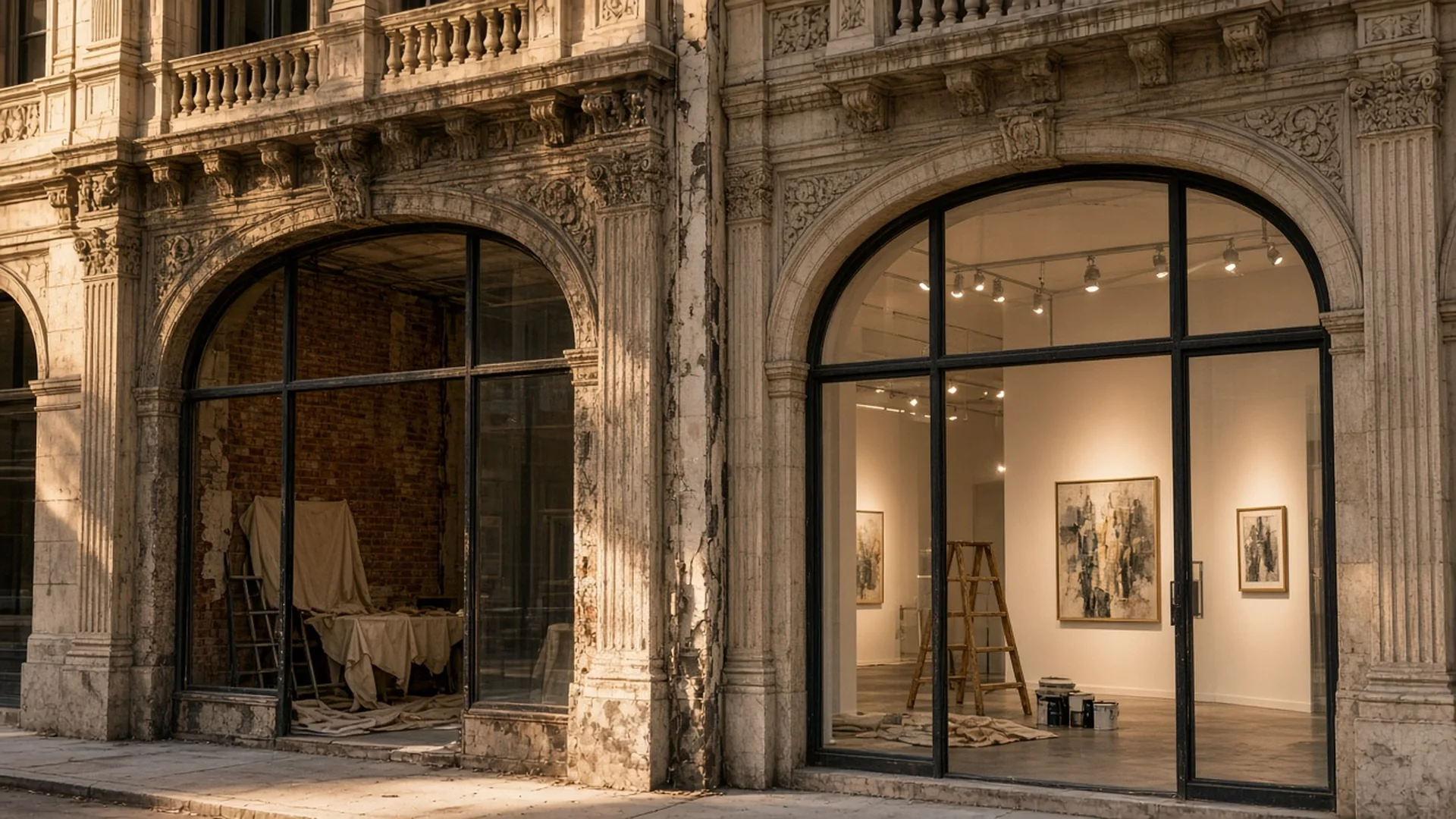
Downtown Los Angeles has hundreds of empty storefronts and plenty of entrepreneurs looking for a first or second location. A new city pilot called Vacant to Vibrant is trying to connect the two, and both small business owners and property owners can sign up now.
What the program is
Mayor Karen Bass launched Vacant to Vibrant on Oct. 2 in the Historic Core, with $500,000 in federal Community Development Block Grant funds secured with Councilmember Ysabel Jurado. According to the mayor's office, the program covers initial startup and leasing costs for small business owners in order to activate vacant storefronts and drive foot traffic.
The first deal was announced at the launch: artist Charlie Alston signed a lease to open a gallery in a Historic Core storefront the city says had been closed for a decade, made possible through a partnership between Broadway Spring Center and the nonprofit Art/Space 114.
The program is administered by Downtown Works, a nonprofit of the Central City Association. The mayor's office said the City Council is working to identify additional funding to take the program citywide, and that two new state laws carried by Assemblymember Mark González, AB 1679 and AB 2418, are meant to encourage these kinds of programs and speed up permitting.
How it works
The Central City Association's program page lays out four steps:
- Apply. Property owners submit vacant storefronts and entrepreneurs apply to take part.
- Match. The program pairs a business with a space based on concept, space and needs.
- Activate. Matched businesses get rent support and hands-on help with permitting, build-out and the other steps needed to open.
- Sustain. As the initial lease period ends, the program assesses what is working and helps businesses find a path to long-term sustainability.
The CCA describes the leases as supported and short-term. Interest forms for both business owners and property owners are on that page.
How much will it cover?
The overall budget is public. The number of storefronts it will support is not. Bisnow reported that the number of spaces remained unclear, as BOMA Greater Los Angeles summarized. The program borrows its name and model from San Francisco, where a Los Angeles City Council motion cited 18 participating storefronts, with 11 businesses moving into permanent leases, according to BOMA's summary.
For entrepreneurs: how to make a strong case
The program has not published a detailed scoring rubric, so treat these as general preparation tips:
- Know your downtown customer. Downtown is not one market. Office workers, residents, event crowds and tourists keep different hours. Be ready to explain who walks through your door and when.
- Bring a realistic budget. Rent help covers the start. Show you have enough cash to keep operating after the support period ends.
- Think about the space you need. Square footage, frontage, venting for food, power for equipment and accessibility all affect whether a match works.
- Line up your paperwork. Have your business registration, city business tax registration, seller's permit if needed, and insurance quotes ready so permitting can move fast.
- Plan for the handoff. Since the program is built around a short initial lease, think now about what rent you could afford in a longer-term deal.
For property owners: what to weigh
Commercial owners should look at the practical side. BOMA's write-up notes that permitting, tenant improvements, lease terms, insurance and operating costs all shape whether a temporary arrangement works, and that some older buildings may need upgrades before a small business can move in. Owners considering the program should know the condition of their space, the improvements it needs, and what lease terms they would offer a tenant who succeeds.
Why it matters
The mayor's office said downtown is about 1% of the city's land but home to more than 90,000 residents and generates 30% of the city's revenue. With more visitors expected for major events in the coming years, the blocks between venues will shape how people experience the city.
For a small business owner, a pilot like this can lower the cost of testing a downtown location. For a landlord, it can turn a dark storefront into an active one. The open question is how many matches the first $500,000 can support and how many of them stick, so watch for the city's results and any expansion to other neighborhoods.
Downtown businesses may also want to follow the LA Area Chamber of Commerce's Rally LA program, which just named its first DTLA cohort and says more neighborhoods are coming.