

Boyle Heights Cold-Storage Pause: What Owners and Food Firms Should Know
LA is drafting a temporary ban on large cold-storage permits in Boyle Heights after the Lineage fire. Who is covered and what owners and tenants should do.
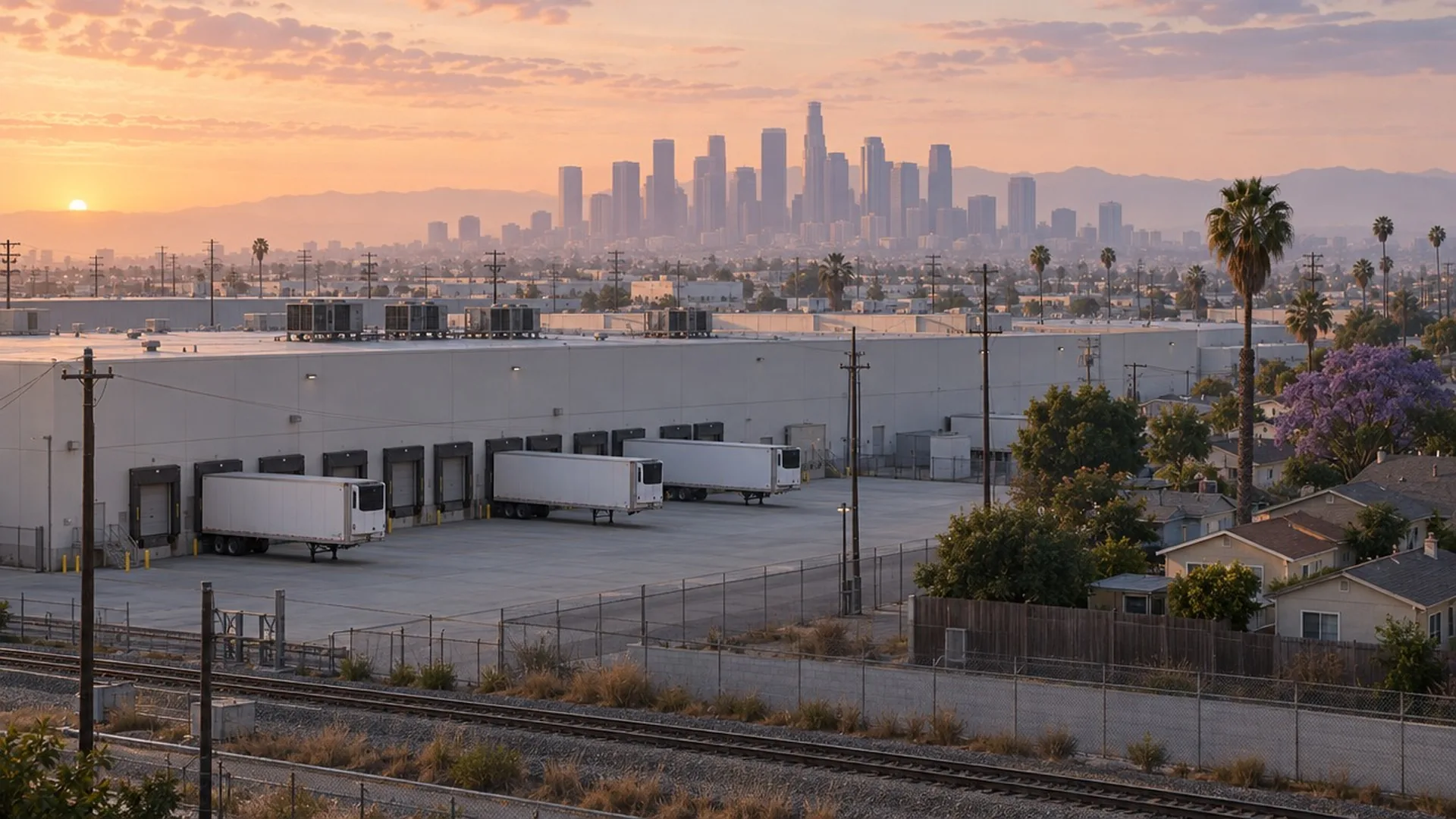
Los Angeles is moving to pause new large cold-storage warehouses in Boyle Heights, and the details matter for anyone who owns, leases, brokers or depends on refrigerated industrial space on the Eastside.
On Friday, Nov. 13, the City Council voted 10-0 to ask the city attorney to prepare an interim control ordinance that would temporarily stop permits and certificates of occupancy for large cold-storage warehousing and distribution uses in the industrial areas of the Boyle Heights Community Plan area, NBC Los Angeles reported. The motion came from Councilmember Ysabel Jurado, who represents Boyle Heights. The council is expected to vote on the ordinance itself at a future meeting.
Why the city is acting
The move follows the June 17 fire at the Lineage Logistics cold-storage warehouse at 1400 S. Los Palos St. Residents dealt with smoke, a hazardous cleanup, pests and the smell of rotting food for months. The city had already asked planners to delay or restrict permits for that property.
In a report cited by NBC, Planning Director Vincent Bertoni said investigations into the cause of the fire need to proceed without interference, and that recommendations for a new review and approval process for large cold-storage uses are still pending.
The South Coast Air Quality Management District said Friday that Lineage has completed all actions required under its abatement order and that air monitoring ended Nov. 10. The 39 notices of violation issued to the company over the summer are still moving through enforcement.
What the draft ordinance would do
A draft version of the ordinance, attached to a city Planning and Land Use Management Committee report (Council File 26-0906-S10), gives a sense of the scope. The final text could change, but as drafted:
- What counts. A "large cold storage warehousing and distribution use" is a site with more than 20,000 square feet of cumulative space refrigerated to 45 degrees Fahrenheit or below, used mainly for high-volume storage of goods sold to businesses or for distribution to manufacturers, wholesalers, retailers or end users. Refrigeration that is accessory to another main use, such as a store or restaurant, is not covered.
- Where it applies. Properties zoned Industrial 2 (I2), Industrial 3 (I3), Industrial-Mixed (IX5) and Industrial-Mixed 6 (IX6) within the Boyle Heights Community Plan area.
- What is paused. Building, change-of-use, grading and similar permits and certificates of occupancy for new or existing large cold-storage uses, along with new utility connections, solar arrays, energy storage and electrical upgrades serving them. The Lineage site is singled out by parcel.
- What is exempt. Routine building, electrical and mechanical maintenance; tenant improvements for parts of a site not used for cold storage; work that improves fire and life safety; and permits needed to comply with an order from the city or another regulator.
The ordinance works through permits. As drafted, it does not on its face order existing facilities to close, but it would make it hard to build, expand, convert or significantly alter one in the covered area while it is in effect.
How long it could last
The ordinance would take effect for 45 days, with possible extensions of 10 months and 15 days and then up to another year, for a total of about 22 months and 15 days, or until the city adopts new zoning, building or fire-code rules, whichever comes first, according to NBC. Interim ordinances of this type are adopted as urgency measures under state law, which requires a supermajority of the council.
What owners, tenants and food businesses should do now
Check your zoning and square footage. Look up your parcel on the city's ZIMAS map to confirm its zone and community plan area. Then measure how much of your building is refrigerated to 45 degrees or below. The 20,000-square-foot threshold is cumulative across the property.
Move up permit timelines, carefully. If you planned a freezer expansion, a new refrigeration system or a rooftop solar project on a cold-storage building, talk to a land use attorney or permit expediter now about what may be affected and when. Do not assume a pending application will be grandfathered.
Read your lease. Tenants and landlords should review clauses covering permitted use, alterations, permit contingencies and what happens if a planned build-out cannot be approved. Brokers marketing Boyle Heights industrial space for refrigerated users should disclose the pending rules.
Plan for capacity, not just compliance. Restaurants, grocers, caterers and food makers that rely on third-party cold storage should not expect new large facilities in Boyle Heights soon. Ask your providers about their capacity, and consider backup options in other parts of the region.
Prioritize safety upgrades. The draft exempts work that improves fire and life safety. Operators who have been putting off sprinkler, detection or ammonia-system improvements have every reason to move forward.
Watch the council calendar. The ordinance still needs a council vote. You can follow Council File 26-0906-S10 on the City Clerk's site and submit public comment before the vote.
The bigger picture
Cold storage is essential to how Los Angeles feeds itself, but the Lineage fire showed what can happen when a very large facility sits close to homes and schools. The draft's focus suggests the permanent rules will center on siting, fire protection and rooftop solar on large buildings, and other neighborhoods will be watching.