

LA County's $12M Life Sciences Space Fund: Loans Up to $5M for Lab Space
L.A. County opened a $12M fund with loans up to $5M for shared lab and manufacturing space, with tenant rents 15% below market. Phase 1 closes Feb. 12.
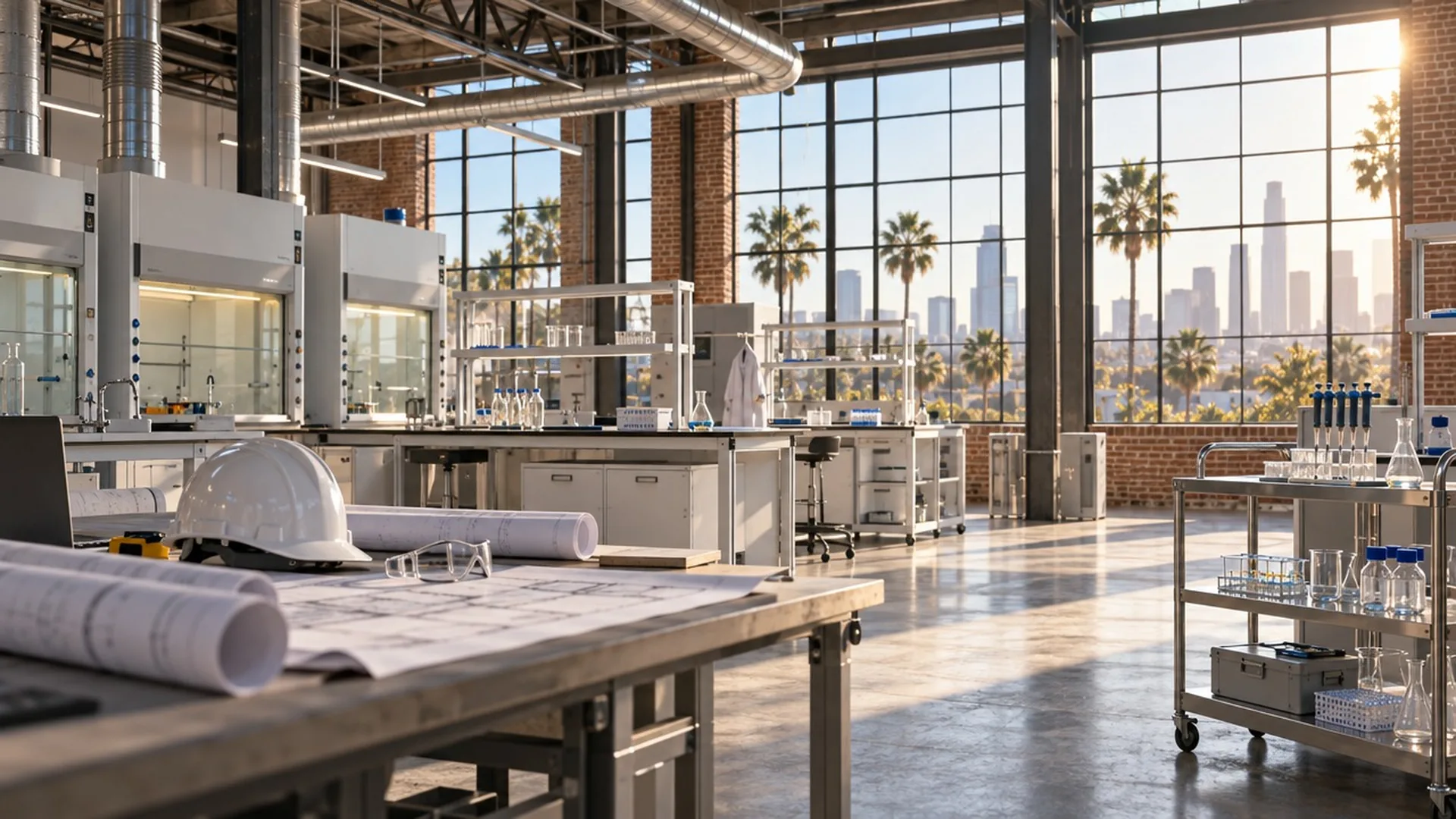
L.A. County has a growing network of biotech incubators, but companies that outgrow them often struggle to find affordable lab and production space nearby. The county is now putting loan money behind that gap. On Nov. 16, the L.A. County Department of Economic Opportunity (DEO) opened applications for a $12 million revolving loan fund to help build multi-tenant life sciences and manufacturing space. The loans go to property owners, not startups directly, but founders who need space should pay attention, because the program comes with a rent discount for tenants.
What the fund does
The Life Sciences Graduation and Manufacturing Space Fund, or GMSF, offers loans of up to $5 million to develop shared lab and manufacturing facilities in the county. DEO says the goal is to create 60,000 to 80,000 square feet of new life sciences space and to generate or retain about 200 jobs over the next two years. The fund is administered by the Local Initiatives Support Corporation (LISC).
Key details from the county's announcement:
- Who can apply: Universities, research institutions and specialized private developers that own a potential development site or hold a qualifying long-term master lease on one.
- What the money covers: Design, site development, core and shell construction, shared infrastructure, code-compliance upgrades and tenant-ready improvements.
- The tenant benefit: Eligible tenants of funded facilities will pay rent at least 15% below the applicable market benchmark.
- Underwriting: Loans are subject to underwriting and required approvals.
Timeline
The application has two phases. Phase 1 pre-qualifies applicants based on business type, the proposed site, project scope, a high-level budget and financial status, the tenant strategy and project readiness. Phase 1 closes Feb. 12, 2027, at 5 p.m. Pacific.
Pre-qualified applicants will be invited to a Phase 2 full application, which the county expects to run through the end of March 2027. Phase 2 covers organizational structure, financials, legal history, the development plan and expected impacts.
DEO will hold a recorded virtual information session on Dec. 4, 2026, from 10 to 11 a.m. Pacific, and an in-person application clinic on Jan. 22, 2027, from 10 a.m. to noon at DEO's office at 510 S. Vermont Ave. in Los Angeles. Applications and details are on the county's GMSF page, and questions go to gmsf@lisc.org.
A second program, a Tenant Improvement Fund, is planned for early 2027. The county says it will provide another $11 million, with individual loans of up to $800,000, to advance 35,000 to 75,000 more square feet and 100 to 200 jobs.
Why the county is doing this
The county says it has invested $26.2 million in life sciences since its first sector study in 2014. That includes donating 15 acres of land to The Lundquist Institute, putting $6 million toward incubator spaces such as LA BioSpace and BioLabs, and supporting internships and apprenticeships. The local incubator network has grown from one to nine, according to DEO, but companies with a promising product can still have trouble finding a lab large enough to bring it to market.
The fund grew out of a 2025 motion by Second District Supervisor Holly J. Mitchell and the county's life sciences action plan, with state money from California Jobs First through the Governor's Office of Business and Economic Development. The county's 2025-2030 strategy aims to create 10,000 quality life sciences jobs by 2030.
What it means for different players
The following are our general observations, not program rules.
For property owners and developers. If you own or control industrial, flex or older office buildings that could be converted into shared lab or light manufacturing space, this is a source of capital for work that conventional lenders may be cautious about. Remember the trade-off: you agree to rent at least 15% below market to eligible tenants. Model whether the financing terms make up for that, and bring a tenant strategy to Phase 1, since the county will evaluate it.
For universities and research institutions. Schools with land or long-term leases can use the fund to build "graduation" space for spinouts that are leaving campus incubators.
For biotech, medtech and diagnostics founders. You cannot apply for this loan yourself, but you can shape where the space gets built. If you expect to leave an incubator in the next two years, tell landlords, developers and your university tech transfer office what you need: square footage, lab type, power and ventilation, timing. Developers applying in Phase 1 will want proof of demand.
For brokers and contractors. Lab conversions require specialized design and construction. Firms with lab, cleanroom or code-compliance experience may find new projects as funded sites move forward.
The bottom line
Twelve million dollars won't close the space gap the county describes on its own, and loans to developers will take time to turn into move-in-ready suites. But the program is a concrete step toward keeping local life sciences companies in the county as they grow, and it adds below-market rent to the mix. Owners with a suitable site should register for the Dec. 4 session and get a Phase 1 application in before Feb. 12. Founders who need space should start those conversations now.
Sources: LA County Department of Economic Opportunity, Nov. 16, 2026; LA County GMSF page.